
Last updated November 23, 2026
 Sweep & inspection
 Caps & crowns
 Flue relining
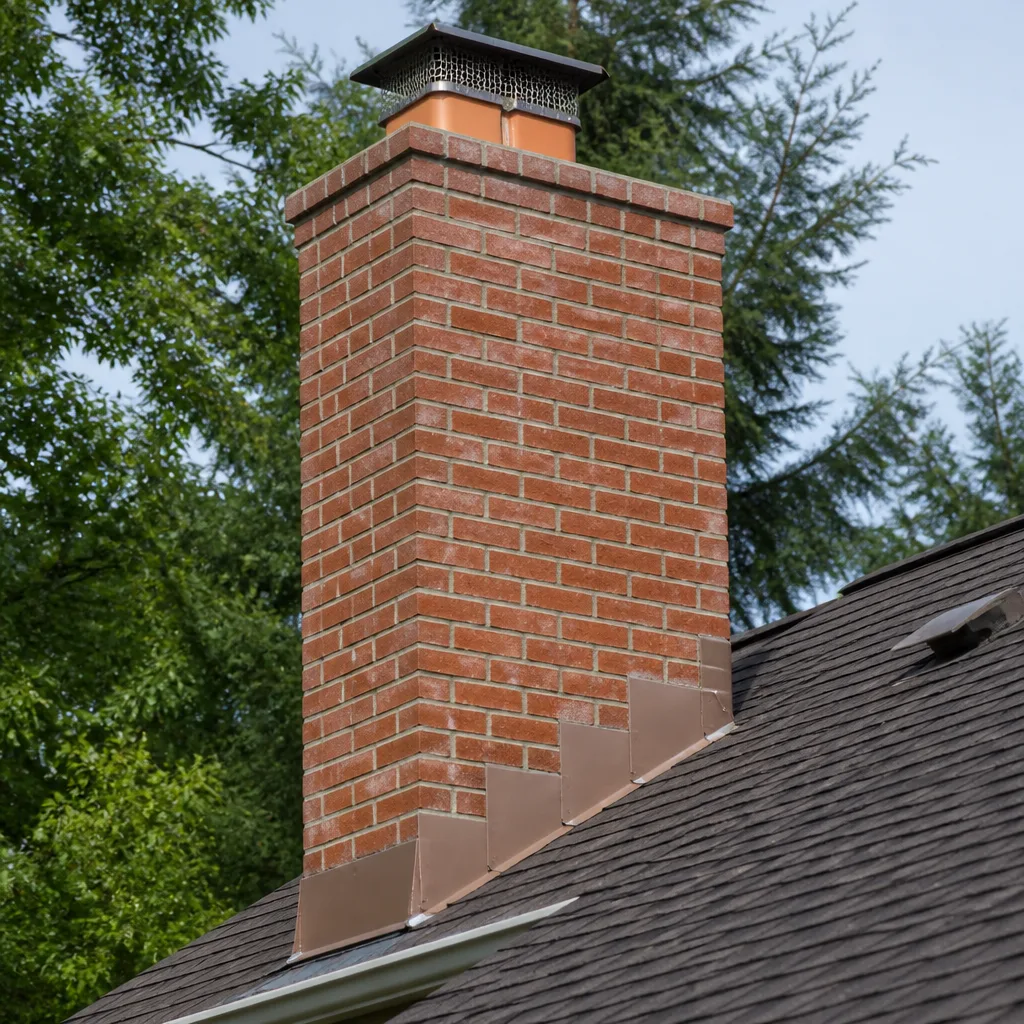 Masonry repair
 Gas fireplace service
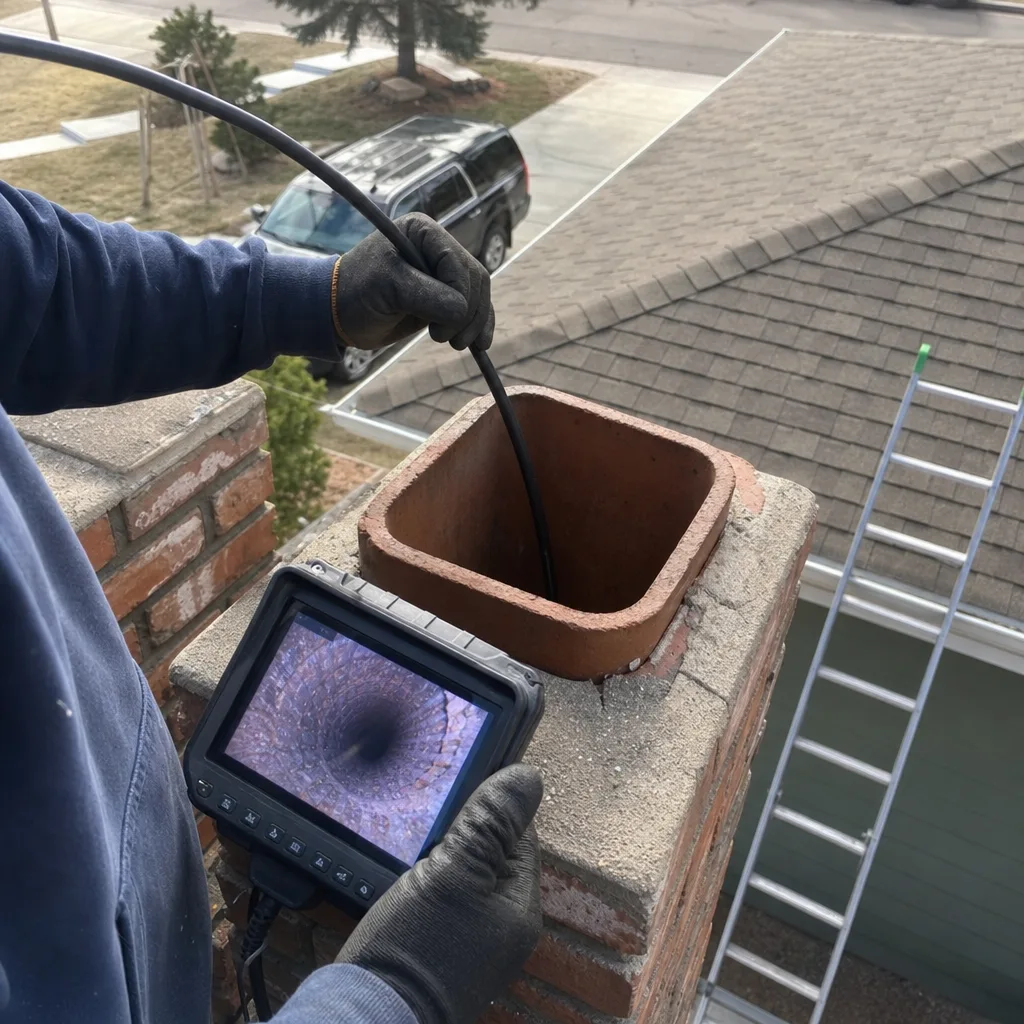
Level 1 sweep and inspection to the NFPA 211 annual standard - flue, crown, cap, and flashing checked and photographed
Chimney sweep logs do not sweep chimneys. They loosen some creosote - which then falls where a brush and vacuum still have to collect it.
Chimney Sweep Troubleshooting in Castle Rock: Common Problems and How to Fix Them
Smoke rolling into the room gets blamed on the draft almost every time, and almost every time that’s the wrong diagnosis. In our experience, the firebox is where a problem shows up, not where it starts. The real failure is upstream: a blocked flue, a liner that’s lost its seal, or a house that’s pulling harder on the chimney than the chimney can pull on the fire. Castle Rock sits high on the Front Range, and the wind and thin air here change how a chimney behaves in ways a lower-altitude troubleshooting guide won’t tell you. Below, we walk through how to trace each symptom to its actual source, what you can safely check yourself, and what needs a specialist before you light the next fire.
Quick Answer
Most chimney problems in Castle Rock come down to one of four root causes: a blockage in the flue, a damaged or unsealed liner, a crown or cap failure letting water in, or negative air pressure inside the house competing with the chimney’s draft. The symptom you notice (smoke, smell, poor draw, staining) tells you which of those to investigate. A visual check of the damper and smoke chamber is safe for a homeowner; anything involving the flue interior, the crown, or combustion air needs a trained sweep with a camera before you burn again.
Styles & brands we work with
- Sweep & inspection
- Caps & crowns
- Flue relining
- Masonry repair
- Gas fireplace service
Table of Contents
- Draft, Blockage, or Combustion Air: Telling Them Apart
- How Castle Rock’s Elevation and Front Range Winds Change Your Draft
- Why Your Chimney Smells in Summer (It’s Not a Cleaning Problem)
- What You Can Check Yourself: Damper and Smoke Chamber
- Crown and Cap Failures: The Water Problem Behind Most Masonry Damage
- Liner Damage and When Resurfacing Beats Replacement
- DIY-Safe Fixes vs. Stop-and-Call-a-Pro Problems
- Building a Sweep and Inspection Rhythm for Castle Rock
Draft, Blockage, or Combustion Air: Telling Them Apart
These three problems look similar from the couch, and homeowners routinely treat all of them as “bad draft.” They’re not the same, and the fix for one will not touch the others. Getting the diagnosis right at the start saves you from chasing a cracked window as a cure when the real issue is a nest in the flue.
A draft problem is a chimney that can’t move enough air to keep smoke going up. The fire lights, burns weakly, and smoke drifts rather than rolls. It’s often worse on mild days and better once the chimney warms up. This is the closest thing to an actual “draft” issue, and it still usually has a physical cause: a flue that’s too short for the firebox, a cold chimney that needs a prime, or a stack effect working against you.
A blockage problem is a physical obstruction in the flue: creosote buildup, a bird or squirrel nest, a collapsed liner section, or a fallen cap. Smoke backs up hard and fast, often the moment you light the fire. You may smell a musty or acrid odor even when the fireplace is cold. This is a stop-now problem, not a troubleshoot-later problem.
A combustion air problem is the house starving the fire. Modern homes in Castle Rock are built tight, and bath fans, kitchen hoods, and dryers pull air out faster than the chimney can replace it. Symptoms: smoke puffs back when an exhaust fan kicks on, the fire improves when a nearby window opens, and the problem comes and goes depending on what else is running in the house.
Here’s the quick triage:
- Smoke rolls back immediately and stays: suspect blockage. Stop burning.
- Smoke is weak and drifts, worse on mild days: suspect draft or a cold flue.
- Smoke appears when a fan or dryer runs: suspect combustion air.
- Smoke smell without smoke, cold fireplace: suspect a liner or seal issue.
If you can’t sort out which one you have in a minute or two of checking, that’s a sign to bring in someone who can put a camera in the flue and see the actual condition. A specialist sweep will trace it back rather than guess from the firebox. You can book a chimney sweep when you’re ready to have it looked at properly.
How Castle Rock’s Elevation and Front Range Winds Change Your Draft
Castle Rock sits at roughly 6,200 feet, and that elevation changes how a chimney breathes. Air is thinner up here, which means a fire needs more volume of it to burn the same amount of wood, and the pressure difference that drives a chimney’s draft is smaller than it would be at sea level. A chimney that drew fine at a lower elevation can feel sluggish on the same firebox design at Castle Rock’s altitude. This isn’t a defect in your chimney; it’s the physics of the place you live.
The bigger local factor is wind. Castle Rock sits on the Palmer Divide, and the Front Range wind patterns that roll over that ridge are not the gentle, steady breezes that chimneys are textbook-designed for. Gusts hit the stack from the north and west, downdrafts spill over rooflines, and nearby structures (trees, fences, taller houses uphill) change the pressure at the cap from one week to the next. When a gust drops pressure right at the cap, the chimney can momentarily reverse, puffing smoke back into the room. That’s a wind-pressure problem, not a creosote problem, and no amount of sweeping fixes it.
What to check when wind is the culprit:
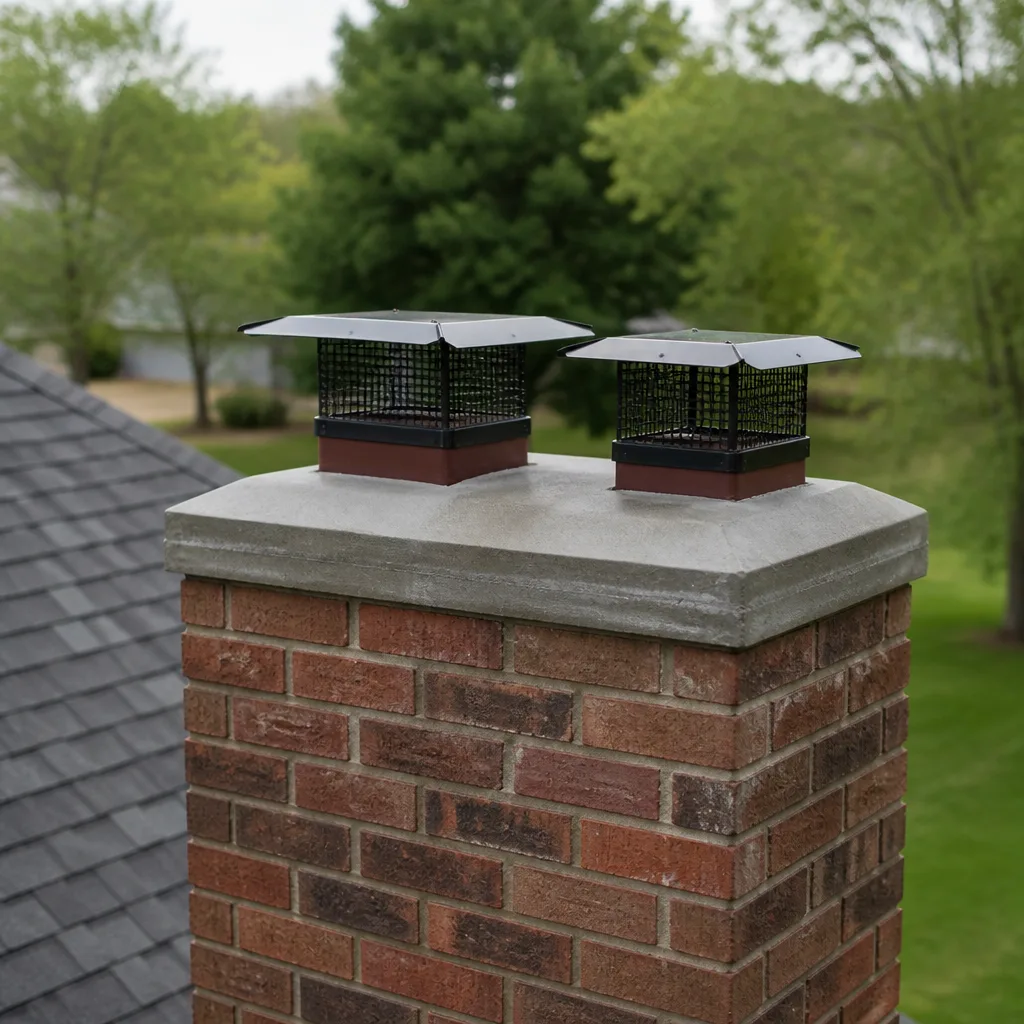
- Cap height and shape. A cap that’s flush with the flue, or too short, gives the wind a straight shot into the stack. A properly sized cap with a solid top and screened sides deflects downdrafts.
- Nearby obstructions. A tree that’s grown up over the roofline since the chimney was last serviced is a common source of turbulent wind at the cap. Trimming may do more than sweeping.
- The 2-10 rule. A chimney should extend at least 3 feet above the roofline where it exits and at least 2 feet above anything within 10 feet horizontally. If yours doesn’t, wind and nearby structures will fight it.
- Stack effect. A tall, cold chimney needs more heat to warm up and start drafting than a short one. On a mild Castle Rock morning, prime the flue with a rolled newspaper torch before lighting the fire.
If wind-driven smoke is chronic in your Castle Rock home, the fix is usually a cap upgrade or a change in termination height, not a cleaning. A specialist can look at the roof-level geometry and tell you which.
Why Your Chimney Smells in Summer (It’s Not a Cleaning Problem)
That smoky, sour smell coming out of a fireplace in July is not a sign you forgot to sweep. It’s a sign of one of three things: moisture reacting with creosote residue, negative pressure pulling house air down the flue, or both working together. Cleaning the chimney helps, but if you don’t address the moisture and pressure, the smell comes back within weeks.
Here’s what’s actually happening. Creosote absorbs moisture. In Castle Rock’s summers, the afternoon thunderstorms and the humid air ahead of them push moisture into the masonry, and any creosote on the flue walls grabs it. The residue then off-gasses, and because the fireplace is cold and the house is often running the air conditioning (which pulls air out of the house), the chimney becomes a return-air path. It pulls the smell back inside instead of letting it vent up the stack.
What actually stops it:
- Seal the flue from moisture. A cap with a solid top and screened sides keeps rain out while letting smoke up. A damaged crown, with cracks or a failed bond, is the other common entry point.
- Eliminate the negative pressure. A top-sealing damper closes the flue completely when the fireplace isn’t in use, which breaks the path that pulls smell back inside. It’s one of the most effective fixes for summer odor, and it also stops heated air from escaping up the chimney in winter.
- Sweep off the residue. A sweep that removes the creosote layer removes the sponge, not just the smell. If your chimney is due, this is the reason to get it on the calendar before the next burn season.
- Ventilate with intent. Crack a window near the fireplace on warm days when the house is under heavy exhaust load (kitchen hood running, dryer cycling). This equalizes pressure and stops the reverse flow.
None of these fixes requires you to tear out masonry. If the smell is stubborn, it’s usually because more than one of the four is in play at once. A specialist can check the crown, the cap, and the damper in one visit and tell you which combination is yours. Summer is a reasonable time to get the chimney looked at while it’s not in use.
What You Can Check Yourself: Damper and Smoke Chamber
You don’t need a camera to catch about a third of the problems we find. The firebox is accessible, and a careful visual inspection of the damper and smoke chamber before you call a sweep can save you a wasted appointment. What you’re looking for is specific, though, and you need to know the difference between “normal” and “needs a professional now.”
Before you look, wait for the fireplace to be fully cold. No embers, no warm ash. Have a flashlight and a mirror or your phone’s front camera ready.
- Open the damper and check the plate. Look for rust-through, a bent or warped plate, or a plate that won’t sit flat when closed. A damper that doesn’t seat fully means the chimney is never truly closed, which contributes to both heat loss and summer odor.
- Check the damper linkage. Operate the handle or lever slowly and listen for grinding, popping, or a handle that travels without moving the plate. A broken linkage is fixable, but it’s not a homeowner job once the fireplace is assembled.
- Look up into the smoke chamber. With a mirror or camera angled up, check the walls of the sloped chamber between the damper and the flue. Look for: white or gray staining (water), rust-colored deposits (moisture with creosote), spalling brick face, or shiny, glazed creosote. Shiny black glaze is the highest-risk creosote condition and needs professional removal.
- Check the firebox joints. Look at the mortar joints between firebrick. Thin hairline cracks in the mortar are normal. Missing mortar, gaps, or loose brick are not.
- Smell the smoke chamber. If it smells like acrid creosote even when the fireplace is fully cold, the residue layer is heavy.
What you should not do: reach up into the smoke chamber, try to remove creosote, or work on the damper with tools. Some of what you can see from the damper tells you that a professional is needed immediately, not that you should try to fix it yourself. If you see shiny glazed creosote, missing mortar in the firebox, or a damper that’s cracked, stop and schedule fireplace repair before the next fire.
What you’re not looking for: normal soot on the firebox walls, uniform ash on the floor, and light discoloration at the top of the firebox are all routine. The visual check is about spotting damage, not achieving a clean look.
Crown and Cap Failures: The Water Problem Behind Most Masonry Damage
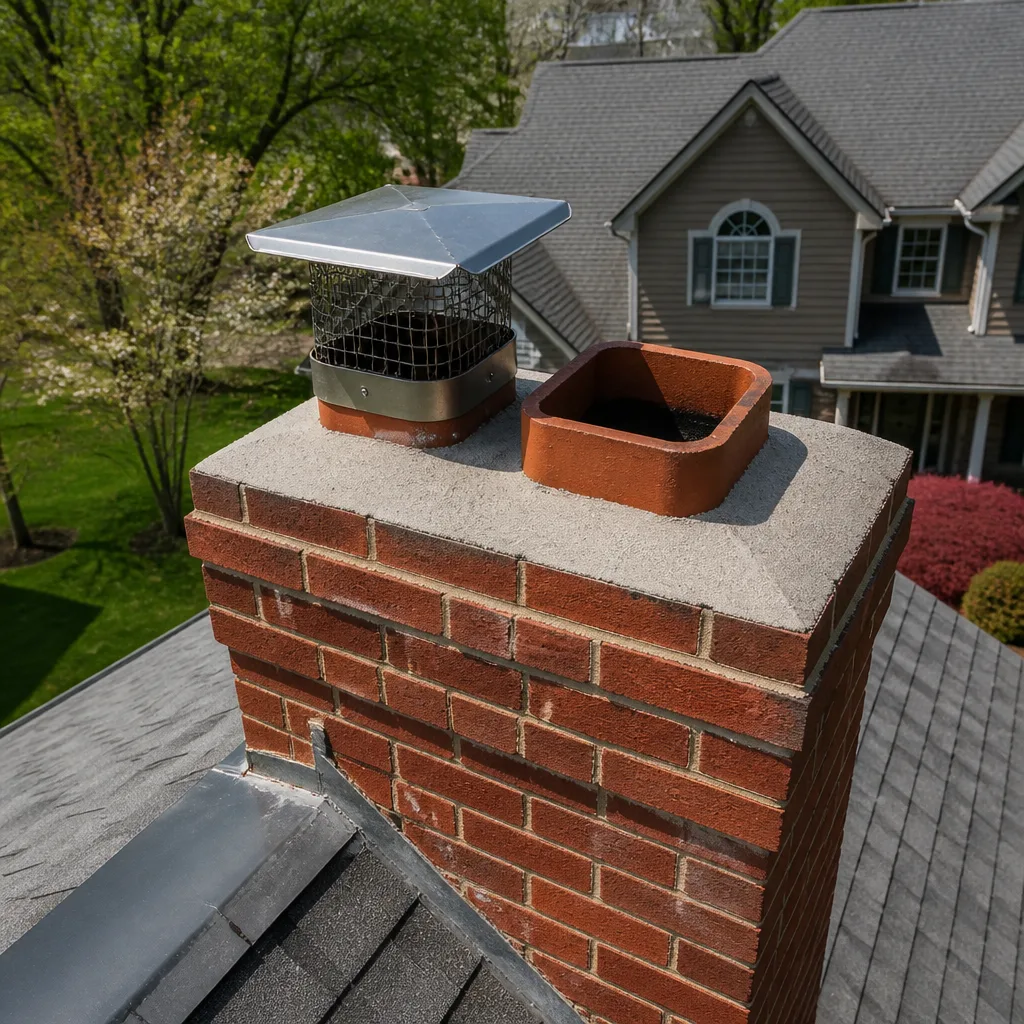
Water causes more chimney damage in Castle Rock than fire ever does. The crown (the concrete cap on top of the masonry) and the cap (the metal screen box that covers the flue opening) are the two components that keep water out, and both fail over time. When they do, the damage travels down through the chimney, sometimes for years before it’s visible inside the house.
Here’s how the sequence usually goes:
- The crown cracks. Hairline cracks widen with freeze-thaw cycles, and Castle Rock gets plenty of those. Water seeps in behind the crown and into the masonry below.
- The brick face spalls. Water trapped inside the brick expands when it freezes and pops off the face of the brick. This is why a failing chimney often looks like it’s shedding its skin.
- The flue liner cracks. Once water is behind the masonry, it can reach the clay liner. A cracked liner lets heat and combustion gases into the masonry structure.
- Interior staining shows up. By the time a brown water stain appears on the ceiling near the chimney, the problem has usually been working for a while.
What a proper crown and cap check looks for:
- Crown cracks wider than a hairline. A hairline crack can be sealed; a wide crack or a crown that’s pulling away from the flue needs replacement.
- Crown slope. The crown should slope away from the flue so water drains off. A flat or negative-slope crown traps water.
- Crown overhang. A properly built crown overhangs the chimney by a couple of inches, with a drip edge, so water doesn’t run down the masonry face.
- Cap damage. A missing cap, a torn screen, or a cap that’s rusted through lets rain, snow, birds, and squirrels in.
- Cap sizing. A cap that’s the wrong size for the flue doesn’t seal, and a cap that’s too small for the firebox restricts draft.
Crown and cap work is one of the five core services we handle, and it’s where the professional-grade materials matter most. A cap built from hardware-store stock will fail again in a few seasons. We specify the same components trusted nationwide, using WeatherShield-grade brands like Olympia Chimney and Gelco for the cap and crown work, so the repair outlasts the next decade of Front Range weather. If your crown or cap is compromised, that’s a chimney repair worth scheduling before the first freeze.
Liner Damage and When Resurfacing Beats Replacement
The flue liner is the component that actually makes a chimney safe. It’s the clay tile or metal duct inside the masonry that carries smoke and combustion gases up and away from the structure. When the liner cracks, spalls, or loses its bond at the joints, the chimney is no longer doing its primary job. Flame and gas can reach the surrounding masonry, and that’s a fire and carbon monoxide risk no amount of sweeping addresses.
How liners fail:
- Moisture from a failed crown. The single most common cause. Water enters, freezes, and cracks the tile.
- A chimney fire. Even a small one can crack tiles or warp a metal liner.
- Age and settling. Joints open, tiles shift, sections separate.
- Improper venting. A gas appliance or insert that’s vented into a flue sized for wood can condense moisture and slowly eat the liner from the inside.
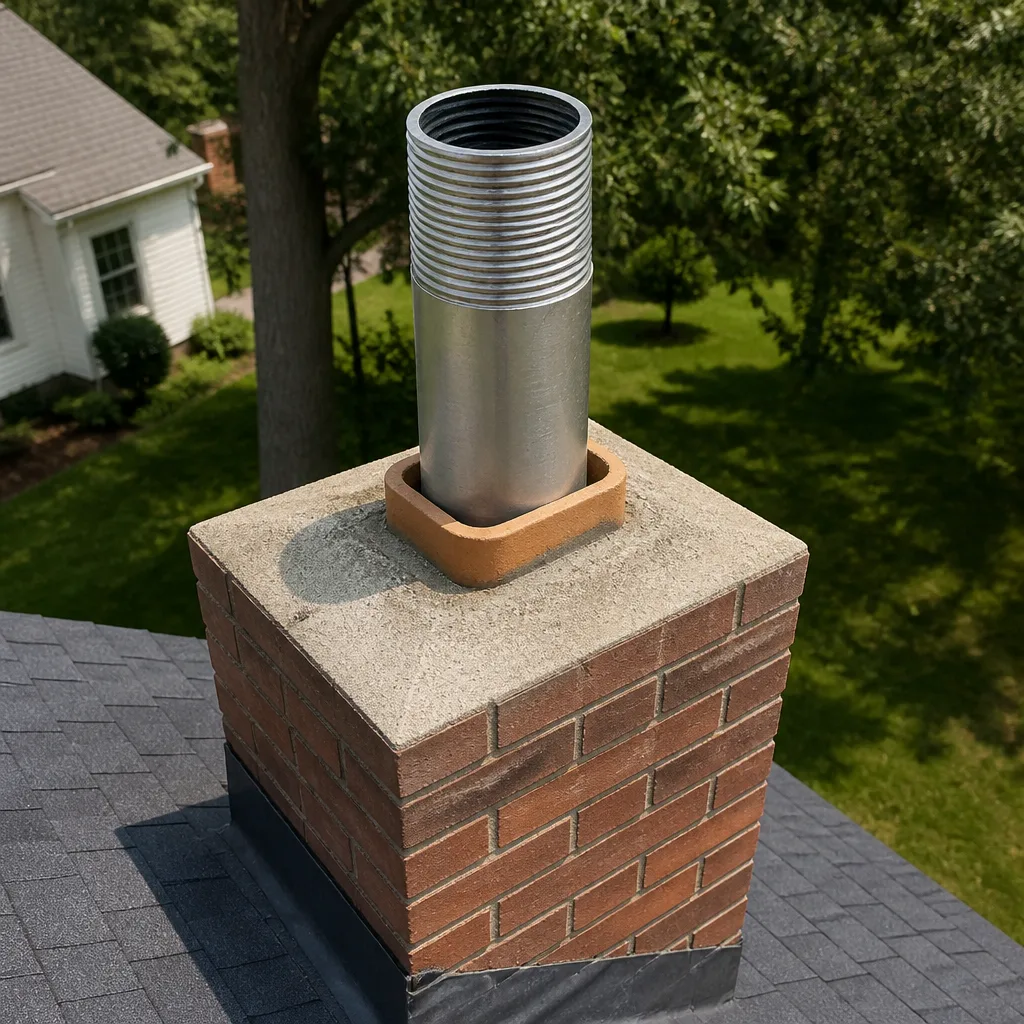
Once a liner is damaged, there are two paths: relining, or resurfacing. Relining means inserting a new liner inside the old one. Resurfacing means applying a new structural layer to the inside of the existing flue without full demolition.
Resurfacing (HeatShield is the system we install) is a specialist repair that general contractors usually can’t do. It restores a deteriorated flue from the inside, forming a new, smooth, sealed surface that’s bonded to the original. It’s appropriate when the existing flue is structurally sound enough to hold the new layer, when the chimney has offsets or geometry that makes a rigid reline difficult, and when the homeowner wants to avoid a full tear-out. Resurfacing is often the right answer on Castle Rock’s older masonry chimneys where the exterior looks intact but the flue has failed.
Relining (with a flexible system such as DuraFlex) is the right answer when the existing flue is too damaged to resurface, when a new appliance needs a correctly sized flue, or when the chimney has an offset that a rigid liner can’t navigate. Flexible liners are also the standard solution for chimneys that a rigid-liner installer would turn away.
Either way, the decision should be made on camera evidence, not on a sales pitch. A proper liner assessment includes a video inspection you can watch, a written report with still photos, and a clear statement of what can safely wait. If someone is quoting you thousands for a liner without showing you why, ask to see the footage. If they can’t produce it, get a second opinion.
DIY-Safe Fixes vs. Stop-and-Call-a-Pro Problems
We’d rather you handle the small stuff safely than call us for a job you can do in five minutes. We’d much rather you call us for the dangerous stuff than try to handle it in the dark. Here’s the honest line between the two.
Safe to do yourself
- Trimming vegetation at the cap level. Clearing a tree limb or shrub away from the cap improves draft and reduces wind turbulence. Trim back to the 10-foot rule.
- Checking the damper linkage by hand. Operating the damper and noting whether it moves smoothly is a visual check, not a repair.
- Priming a cold flue. Lighting a small rolled newspaper torch and holding it near the open damper for a minute before the fire warms the flue and starts a draft. This is a standard, safe technique.
- Cracking a window near the fireplace during heavy exhaust use to relieve negative pressure.
- Removing ash and debris from the firebox floor once the fireplace is fully cold.
Stop and call a professional
- Anything in the flue or smoke chamber above the damper. Creosote removal, glaze removal, and liner inspection all require the right tools and a trained eye. A glazed creosote layer can ignite with a single spark.
- Rooftop work. Crown and cap repairs involve heights, ladders, and tools. This is not a homeowner job, and a fall from a Castle Rock roofline at 6,200 feet is a serious injury risk.
- Damper plate or linkage repair. Once you’ve confirmed the damper is damaged, the fix happens inside the fireplace assembly.
- Any suspicion of a cracked liner. A cracked liner is a carbon monoxide risk. Don’t burn in the fireplace until it’s been inspected.
- Shiny glazed creosote. That’s the third-degree stage of creosote and the highest fire risk. It needs a professional.
- Smoke rolling into the room and staying there. Even if you think you know why, a blockage should be verified before the next fire.
A short, cheap sweep is a safe sweep. If you’re on the fence about whether a problem is in the DIY or the stop-and-call category, treat it as the second. The cost of a sweep is small; the cost of a chimney fire isn’t.
Building a Sweep and Inspection Rhythm for Castle Rock
A sweep once a year keeps most chimneys healthy, but Castle Rock’s climate argues for a slightly more attentive rhythm. The freeze-thaw cycles that crack crowns, the wind that stresses caps, and the long burn season all add up faster than in a milder climate. Here’s a rhythm that works for most wood-burning homes in Castle Rock.
- Late summer, before the burn season. Schedule a sweep and a level 1 inspection. This is the standard, non-invasive check that looks at the flue, damper, firebox, and accessible parts of the appliance. Getting it done before the first cold snap means any wear gets caught before you start burning.
- After the last fire of the season. Do a visual check of the crown and cap from the ground (with binoculars) and the smoke chamber from the firebox. Note any new staining, missing cap pieces, or cracks in the crown.
- Mid-summer. If your chimney smells, check the cap, the crown, and the damper. A top-sealing damper installed in spring prevents the odor problem from starting.
- Annually, budget for the crown and cap. Both have a service life, and both fail from the top down. Building them into your maintenance cycle prevents the water damage that drives expensive repairs later.
- After any chimney fire, however small. A level 2 inspection (with camera) is the right call. Chimney fires can damage liners without leaving obvious signs.
A level 2 inspection is also appropriate after a change of appliance (installing a gas insert, for example), after a major storm, or before buying a home. If you’re not sure which level you need, ask a specialist to talk you through it.
Common Mistakes to Avoid
- Treating every smoke problem as a draft problem. A cracked window helps only combustion-air issues. On a blockage or a failed liner, it makes the smell worse and does nothing for the smoke. Trace the symptom before you try a fix.
- Assuming summer smell means the chimney needs a sweep. Most summer odor is a moisture and pressure combination that survives a sweep. A cap and a top-sealing damper are often the real fix. Sweeping helps, but on its own it comes back.
- Letting a small crown crack run for years. Castle Rock’s freeze-thaw cycles turn hairline cracks into structural damage faster than most homeowners expect. Seal the crack, or have it sealed, before winter.
- Burning green or unseasoned wood. It sends more moisture and more creosote up the flue in Castle Rock’s thin air. Seasoned hardwood, split and dried, gives a cleaner burn and less frequent sweeping.
- Using a hardware-store cap on a masonry chimney. Generic caps are sized wrong for the flue and fail within a few seasons. A cap sized by a specialist and made from professional-grade stock will actually stay put.
- Relining before inspecting. A liner assessment without a camera is a guess. If a contractor quotes a reline without showing you footage, you’re being asked to spend money you can’t verify.
- Burning in a fireplace you haven’t inspected since purchase. A house bought in Castle Rock last year may have a chimney that hasn’t seen a camera in a decade. A level 2 inspection is the right starting point.
See the difference
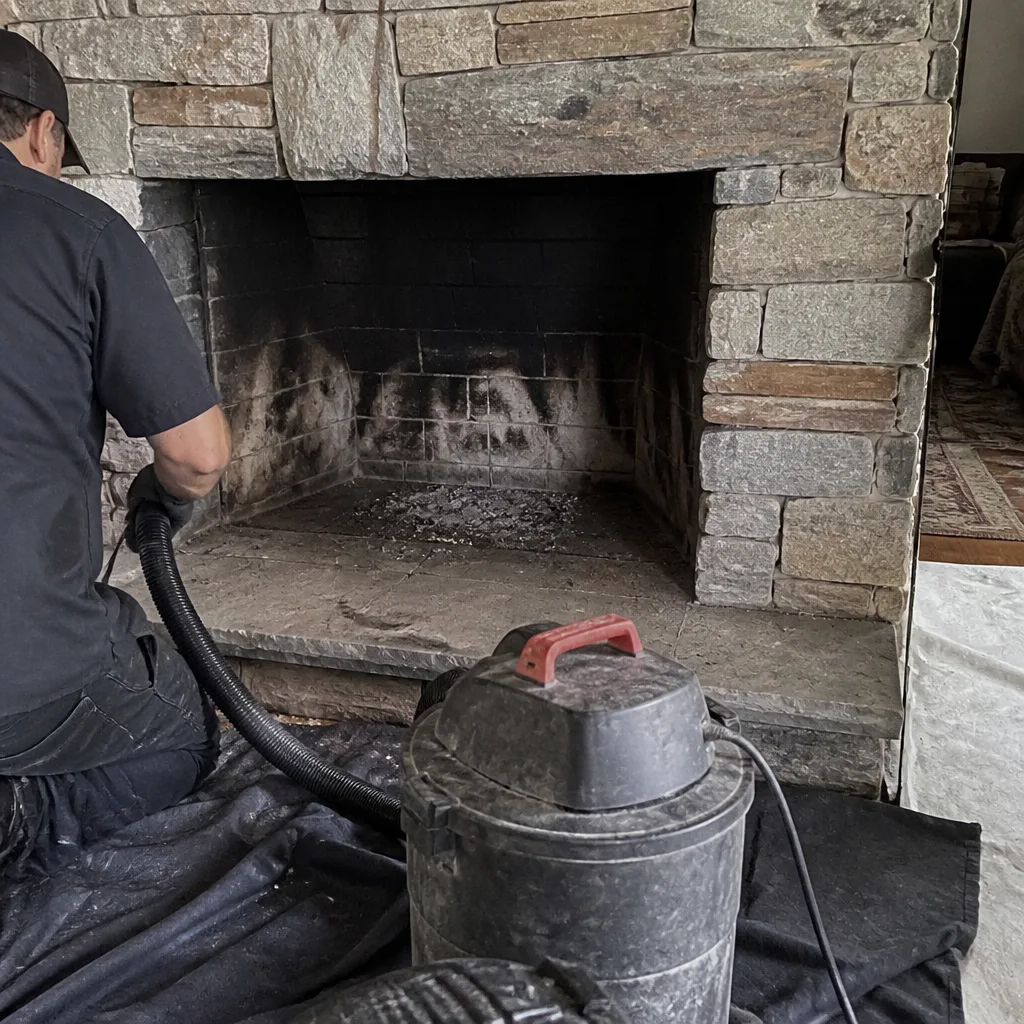 Before
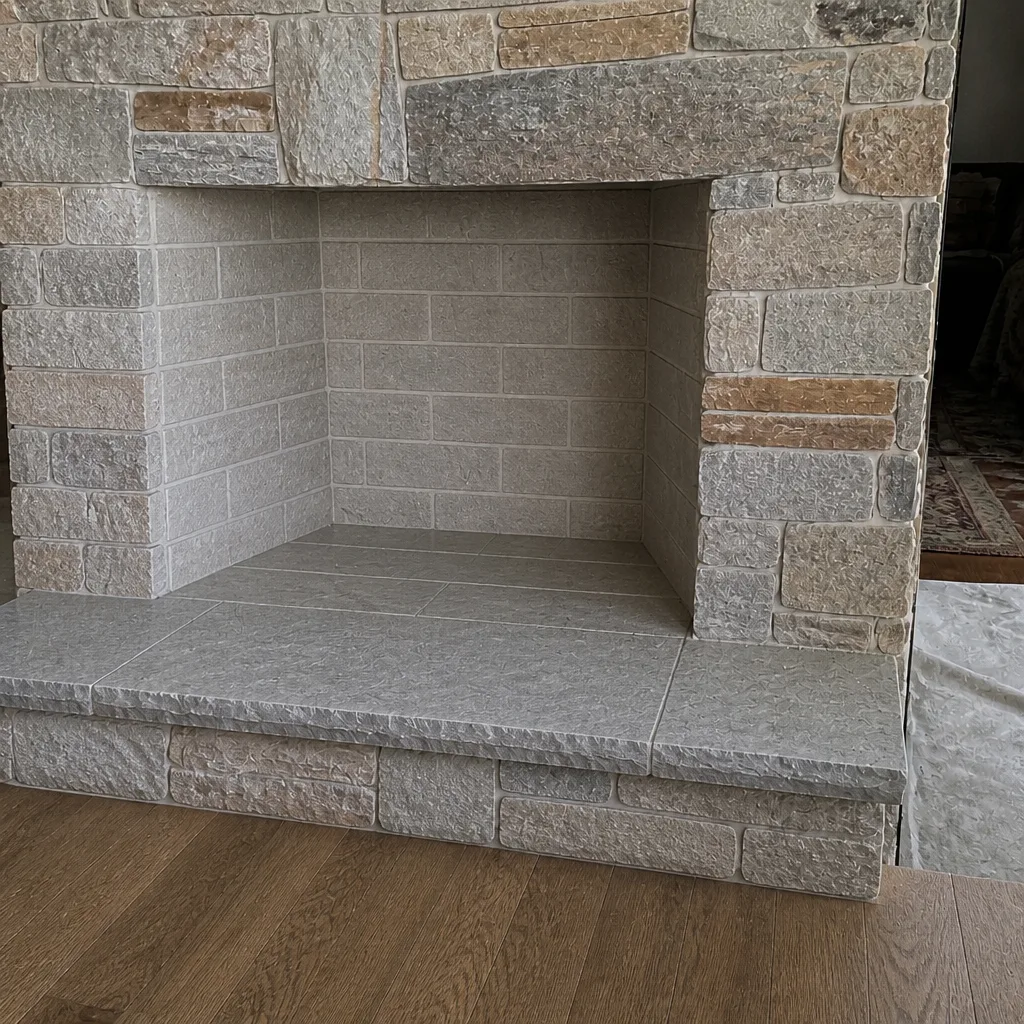 After
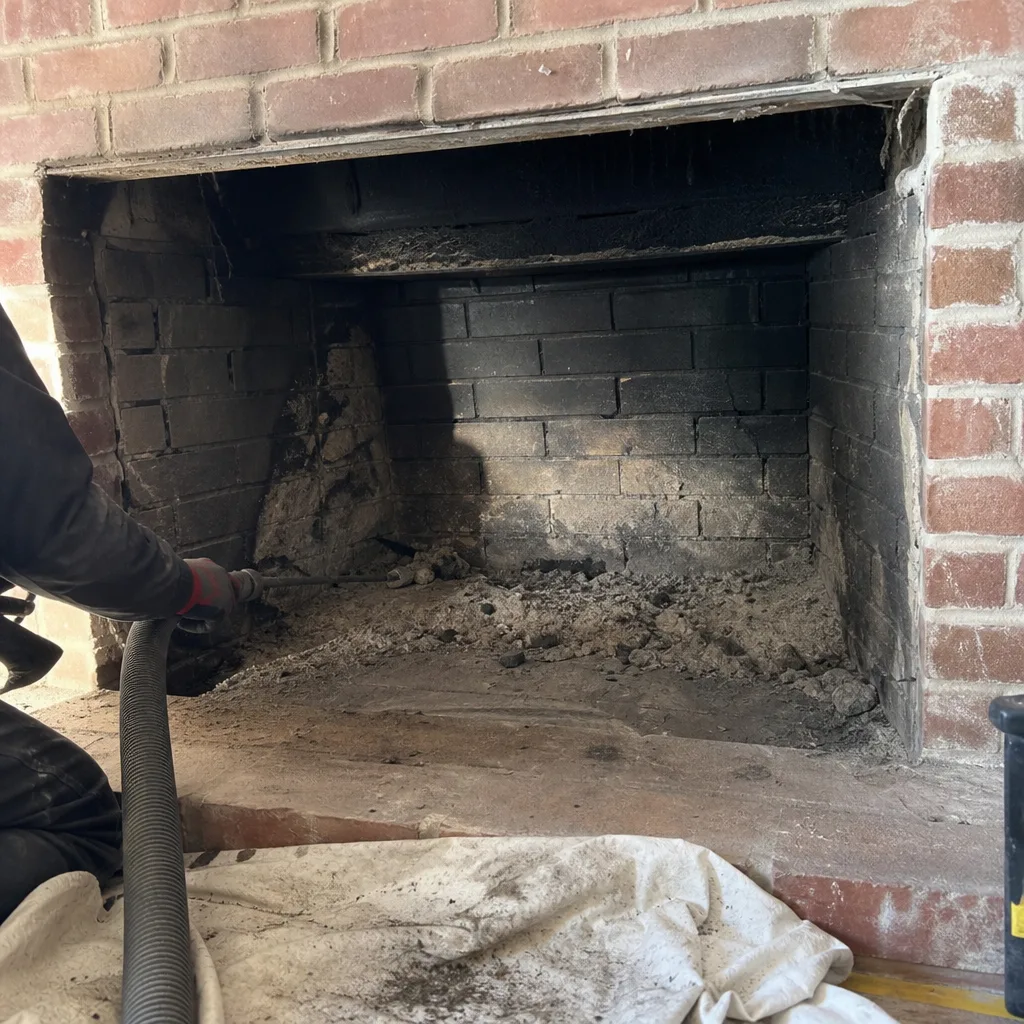 Before
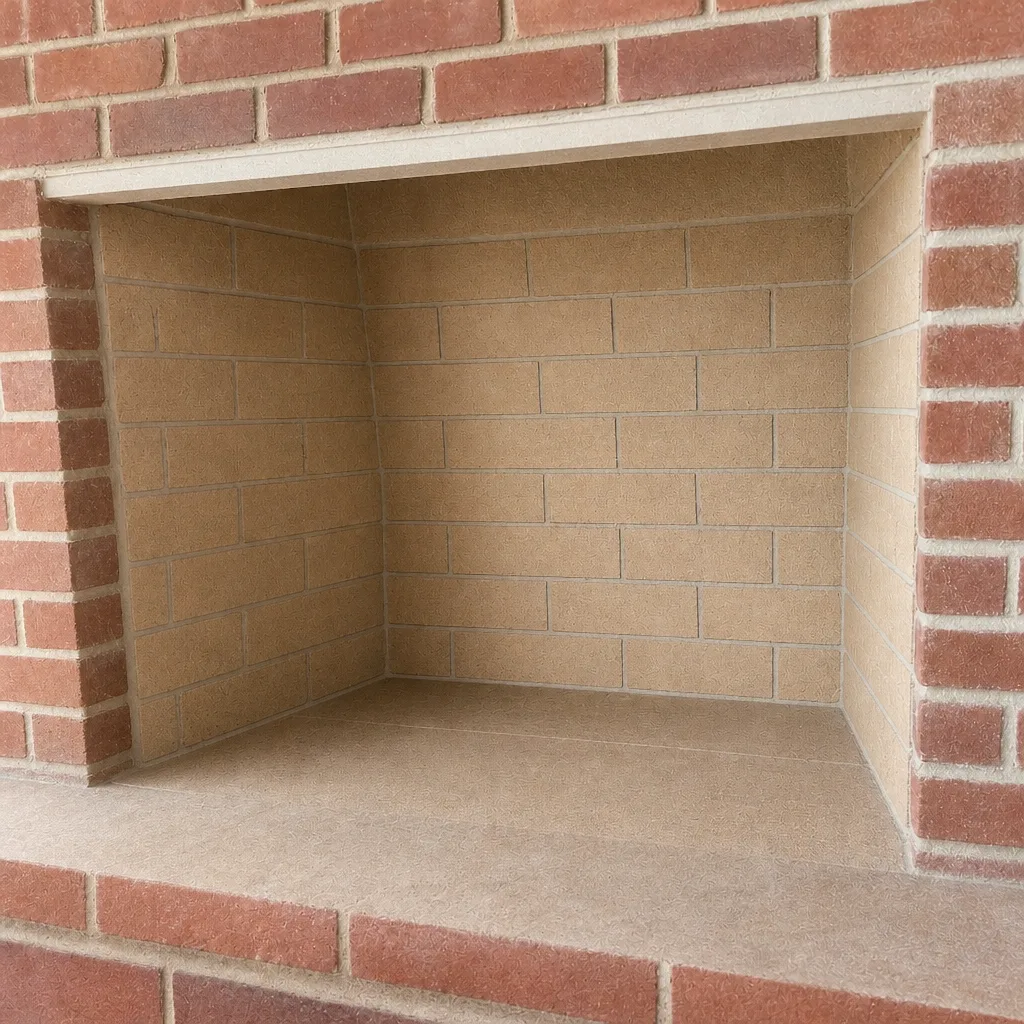 After
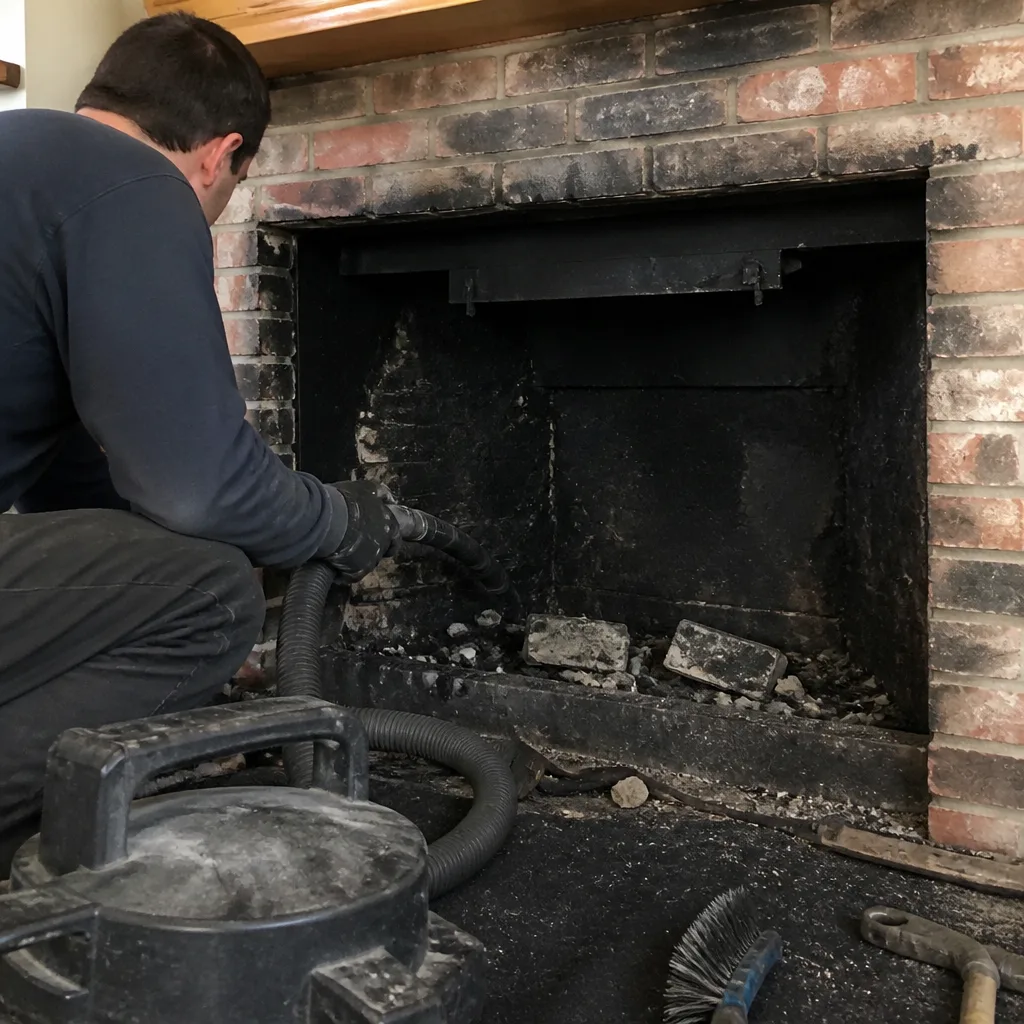 Before
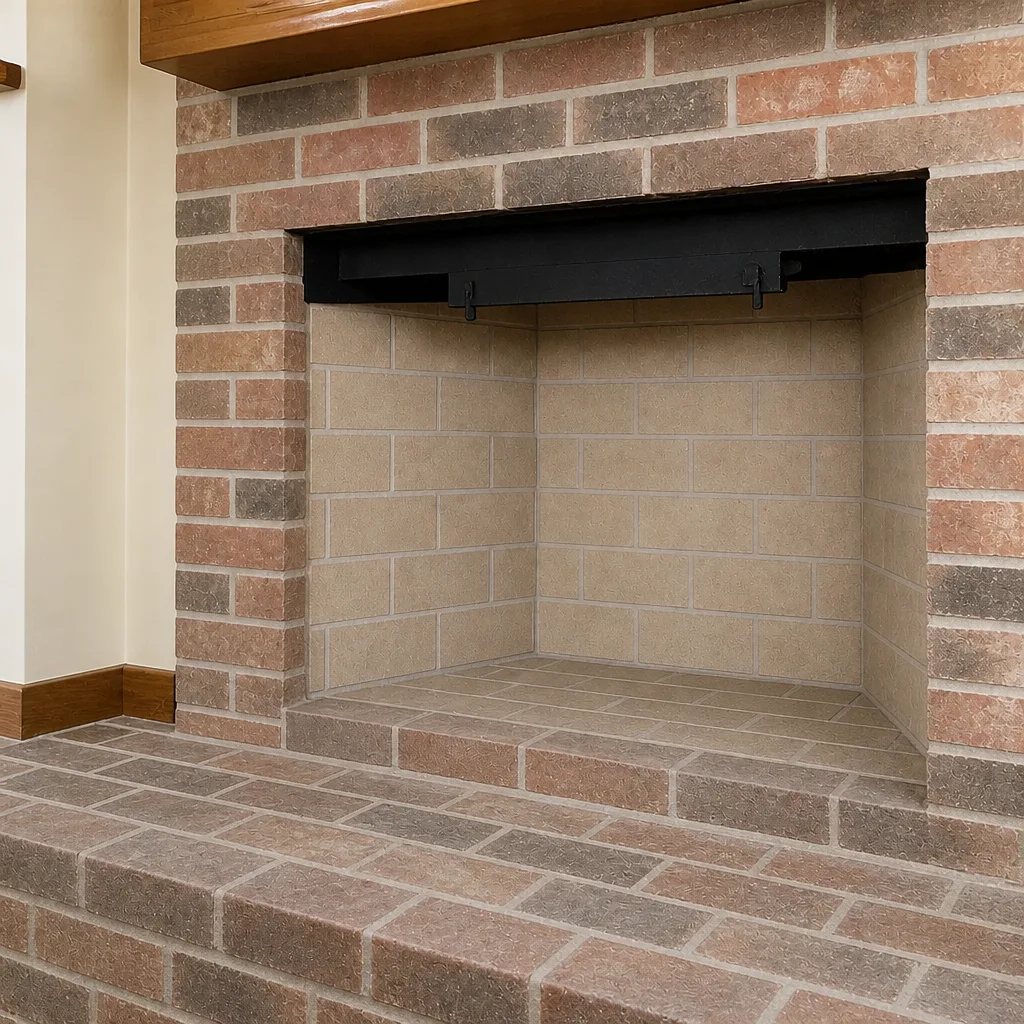 After
When to Call a Professional
Call a professional sweep when: any visible problem is in the flue or smoke chamber above the damper; the cap or crown is damaged; the damper is cracked or disconnected; you see shiny glazed creosote; a chimney fire has occurred; you smell combustion gas inside the house; or you’ve just moved into a Castle Rock home and don’t know the service history. Call us sooner rather than later if the smoke rolls into the room and stays.
Our technicians have up to 9 years of experience, and every job we take on is chimney-specific. We work with professional-grade materials from HeatShield and DuraFlex for liner work, and Gelco, Famco, and Olympia Chimney for caps and crowns. We answer 24/7. Fast dispatch from 7am to 7pm, Sunday through Friday, closed Saturday. Chimney Sweep Castle Rock offers free estimates in Castle Rock. Call (833) 699-7166.
Frequently Asked Questions
Most wood-burning chimneys in Castle Rock should be swept once a year, ideally in late summer before the burn season. If you burn often, or burn wood that isn’t fully seasoned, a mid-season check is worth it. Gas inserts and appliances have different recommendations, so ask your specialist what’s right for your setup. Our technicians have up to 9 years of experience and can tell you in one visit whether your sweep interval should be tight or relaxed. Call (833) 699-7166 for a free estimate.
Creosote builds up in layers on the flue walls, and once it reaches the glazed stage it’s the highest fire risk a wood-burning chimney can carry. Skipping a sweep doesn’t usually cause a problem immediately, but it removes the annual check that catches damage while it’s still cheap to fix. A cracked liner or a failing crown, caught early, is a repair; caught late, it’s a rebuild. If it’s been more than a year, call (833) 699-7166 and get on the schedule.
Summer chimney smell in Castle Rock is almost always moisture plus negative pressure, not a cleaning problem. Creosote residue absorbs humid air and off-gasses, while air conditioning and exhaust fans pull house air down the flue, drawing the smell inside. A properly sized cap, a sealed crown, and a top-sealing damper together usually solve it. A sweep helps by removing the residue, but the smell returns if you only sweep. Call (833) 699-7166 and we’ll check all three.
No. Smoke backing into the room is a draft problem less often than the name suggests. In most Castle Rock homes we look at, it’s a blockage, a damaged liner, or a negative-pressure problem that a cracked window won’t fix. Wind from the Palmer Divide can also cause momentary reversal at the cap, which is a different fix from any of the others. A camera inspection settles which one you have. Call (833) 699-7166 for a free estimate.
Yes, for a limited set of things. You can safely check the damper plate and linkage, look up into the smoke chamber with a mirror or camera, check the firebox mortar joints, and note any smell. What you can’t safely check is anything inside the flue above the damper, and any rooftop crown or cap condition. If your self-check turns up shiny glazed creosote, missing mortar, or a cracked damper, stop and call a specialist. Call (833) 699-7166 for a free estimate.
It depends on what the camera shows. HeatShield resurfacing restores a deteriorated flue from the inside without full demolition, and it’s the right repair when the existing flue is structurally sound enough to hold a new layer. A DuraFlex flexible liner is the right repair when the flue is too damaged, too offset, or the wrong size for the appliance. No one should make this call for you without showing you footage. Call (833) 699-7166 and we’ll walk you through what we find.
We don’t quote a number over the phone because a sweep is priced per job and set by the written estimate. That estimate is free, and it’s written before any work is booked. We tell you what the job involves and what the price is, and you decide. If the chimney needs more than a sweep, we’ll say so – and tell you what can safely wait. Call (833) 699-7166 for a free estimate.
The Bottom Line
Chimney troubleshooting works better when you trace the symptom to its source rather than treating it at the firebox. Smoke, smell, and staining are symptoms; the causes usually live in the flue, the liner, or the crown. Castle Rock’s elevation and Front Range winds mean your chimney behaves a little differently than the textbook versions, and no single fix solves all of it: a cap upgrade for wind-driven smoke, a sealed crown for water, a top-sealing damper for summer odor, and a camera inspection to catch what you can’t see. Handle the small, safe checks yourself. For anything in the flue or on the roof, bring in a chimney-only specialist who can show you the evidence before recommending a repair. Our technicians have up to 9 years of experience, work only in the chimney trade, and use professional-grade materials from HeatShield, DuraFlex, Gelco, Famco, and Olympia Chimney.
Chimney Sweep Castle Rock is here for the annual sweep, the fireplace and chimney repair, the inspection, and the cap or crown work whenever you need it. Call (833) 699-7166 for a free estimate. We answer 24/7. Fast dispatch from 7am to 7pm, Sunday through Friday, closed Saturday. Before your next fire season, get the chimney looked at by a specialist who does this and only this.
Written by the team at Chimney Sweep Castle Rock.