
Last updated November 23, 2026
 Sweep & inspection
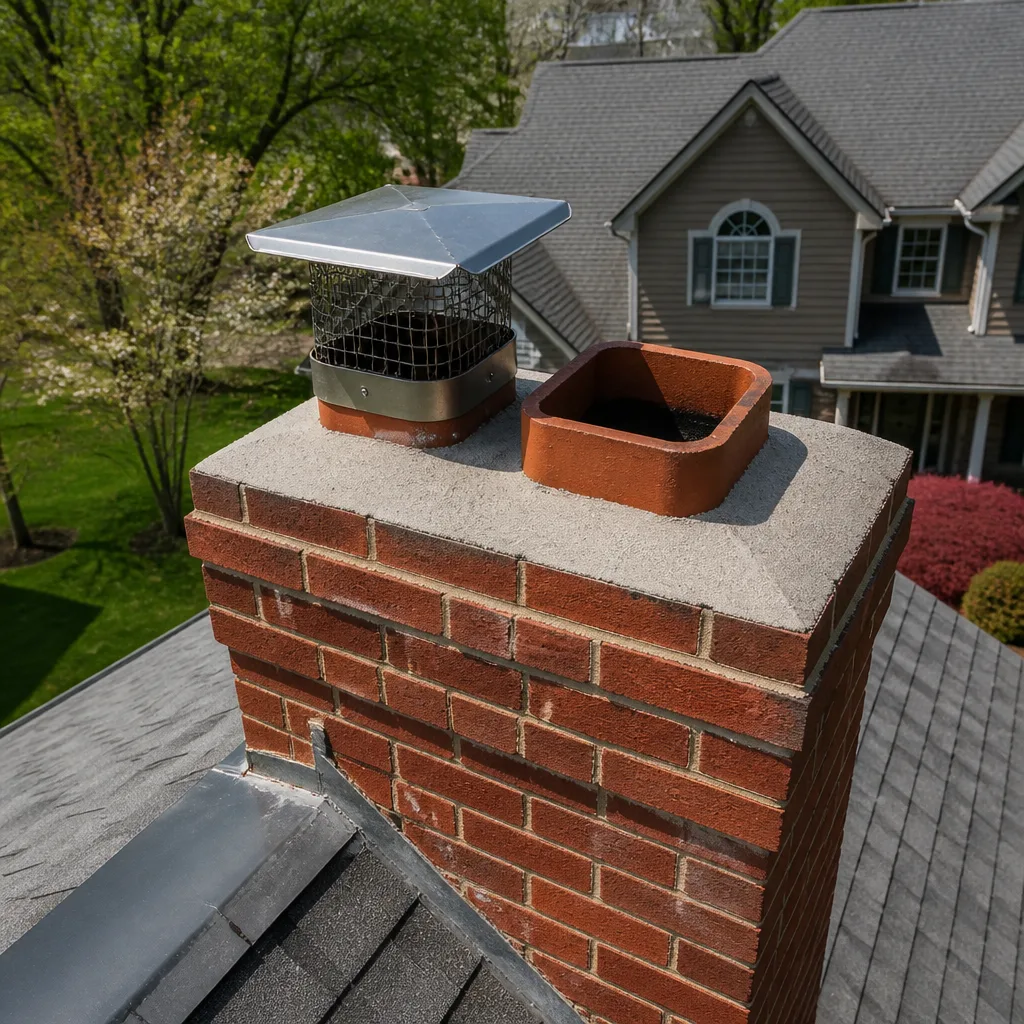
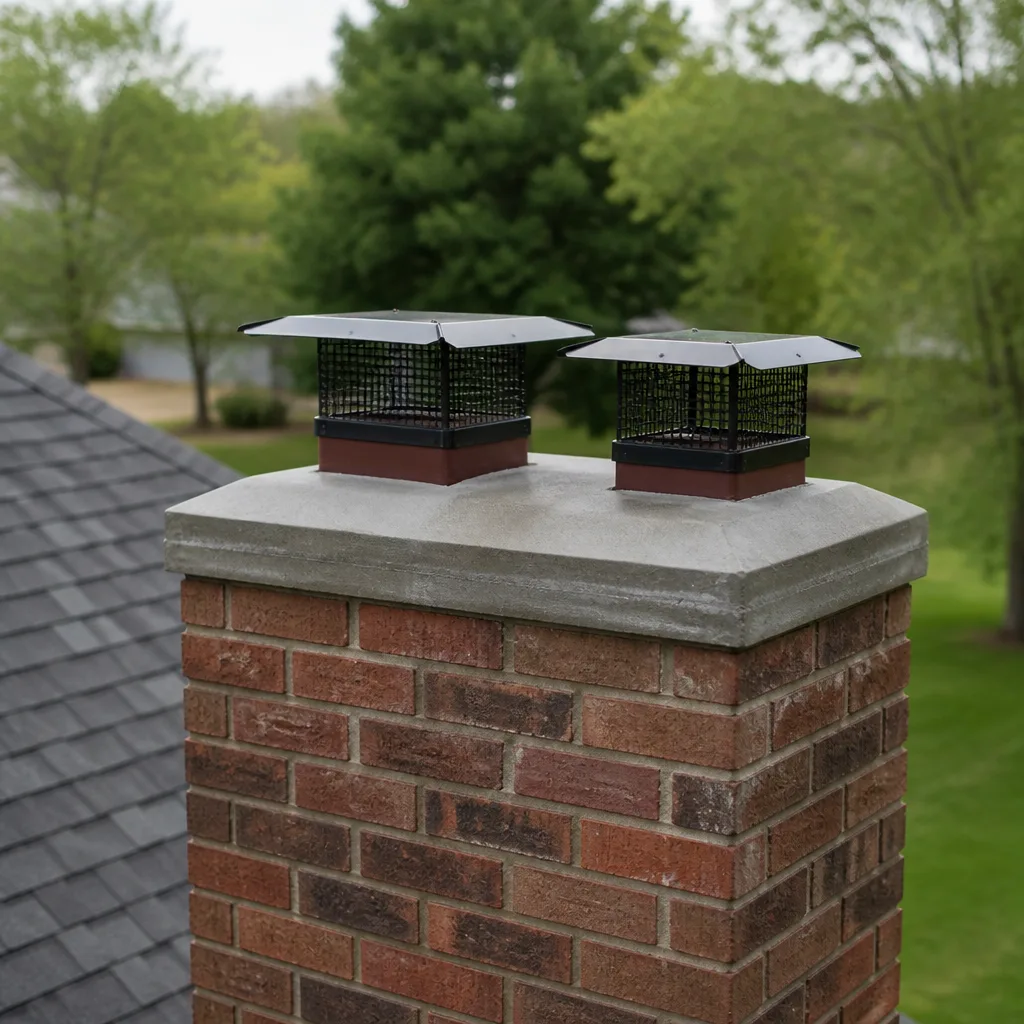 Caps & crowns
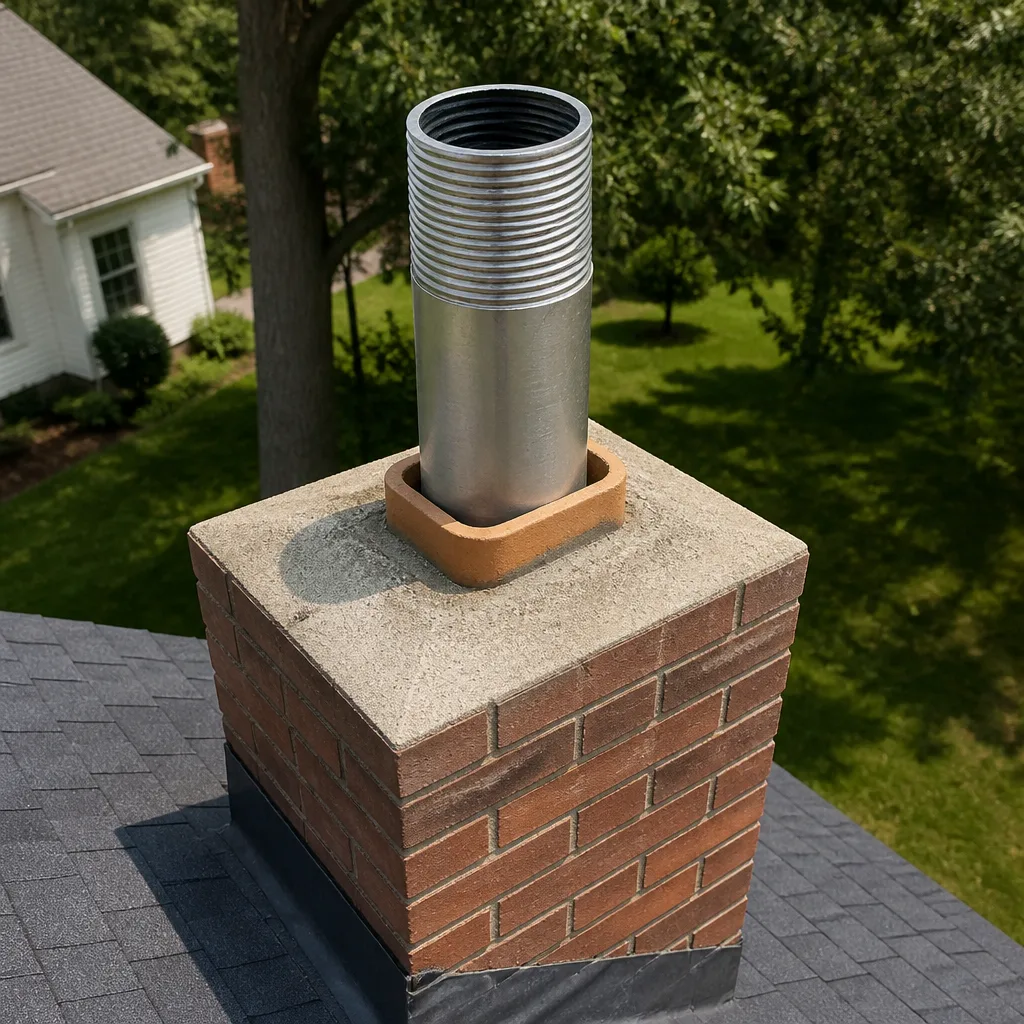 Flue relining
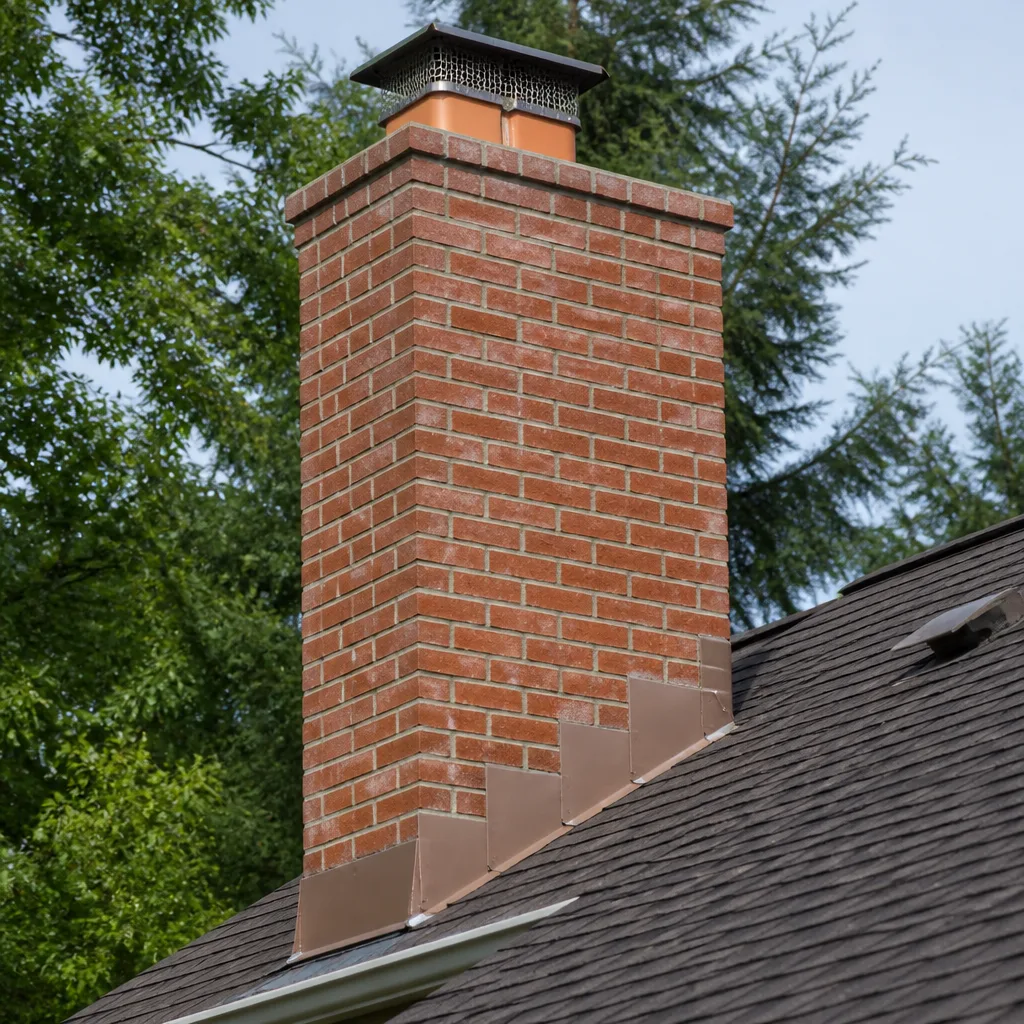 Masonry repair
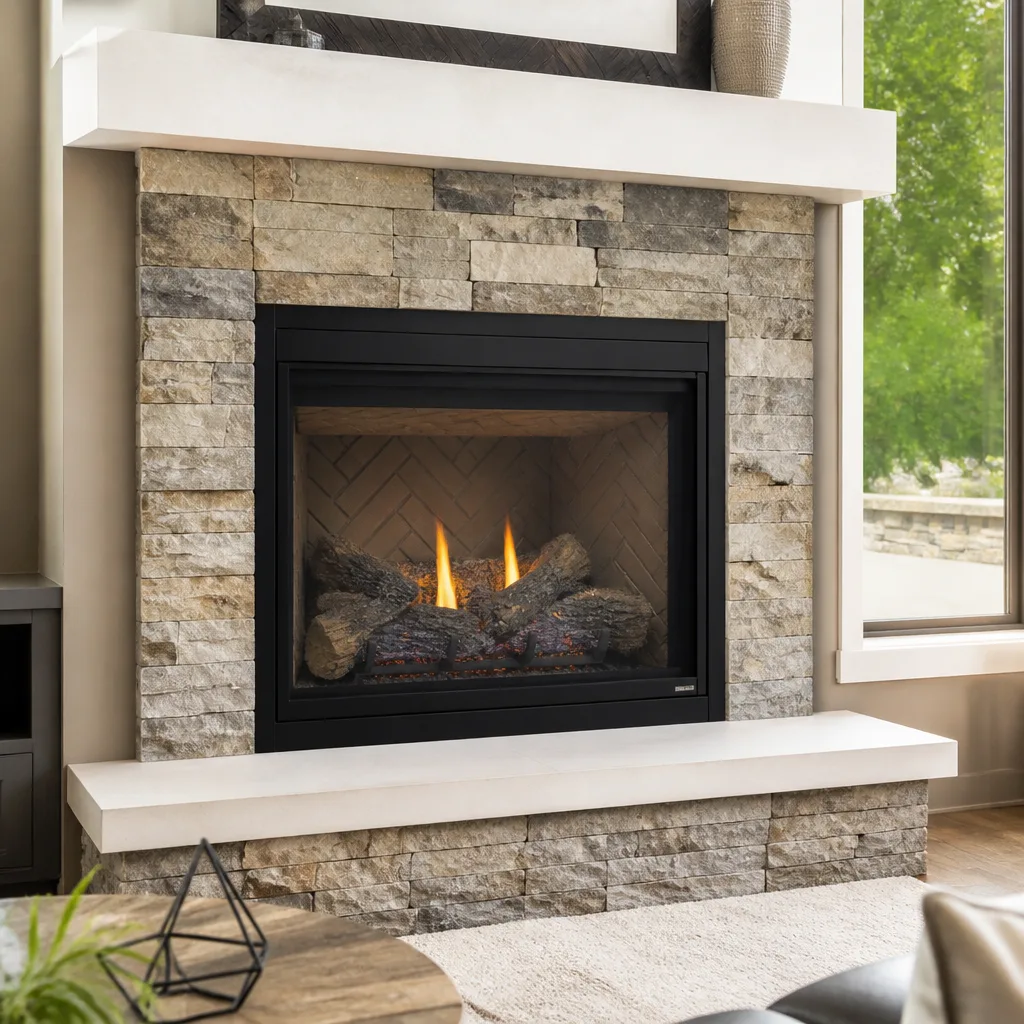 Gas fireplace service
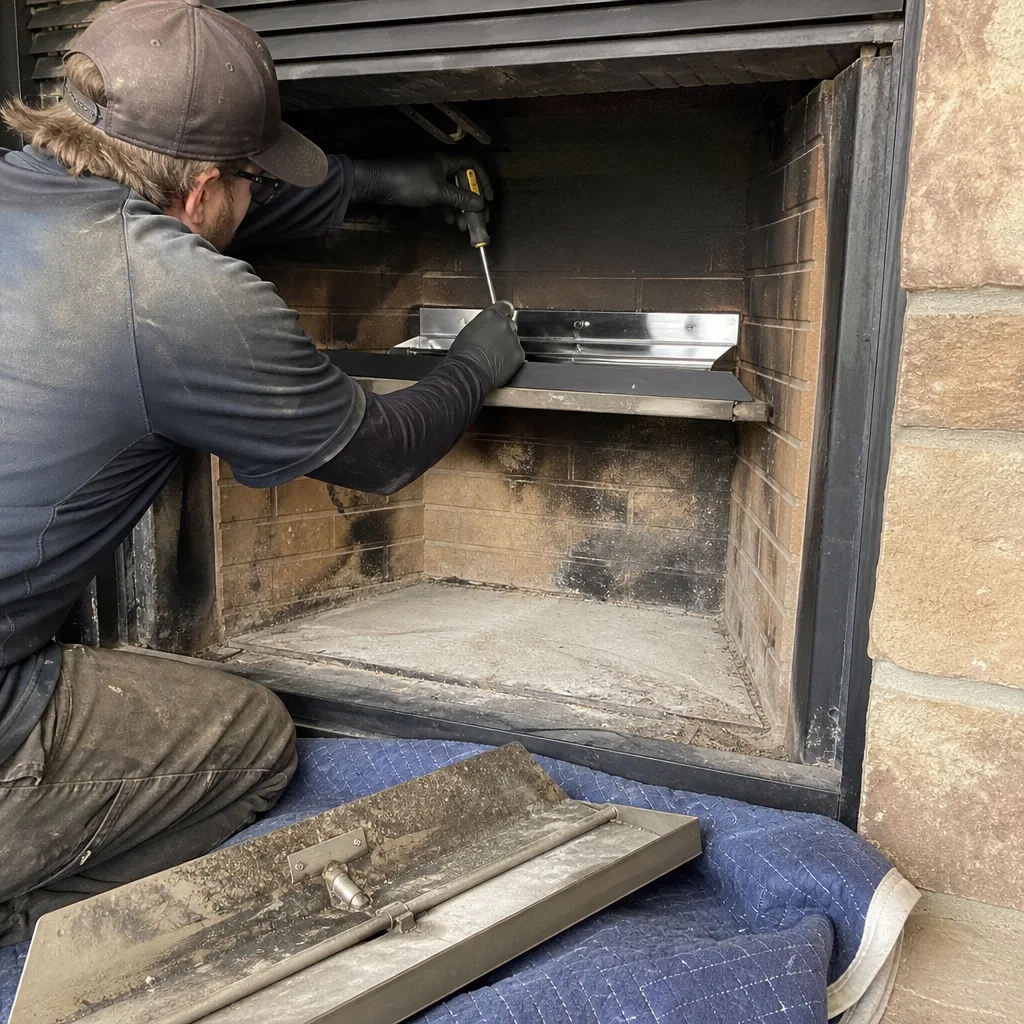
Level 1 sweep and inspection to the NFPA 211 annual standard - flue, crown, cap, and flashing checked and photographed
Chimney sweep logs do not sweep chimneys. They loosen some creosote - which then falls where a brush and vacuum still have to collect it.
The Complete Guide to Chimney Cleaning in Castle Rock
Most chimney fires don’t start during a roaring December fire. They start in March, from the residue left by the last fire of the season that sat untouched all summer. Creosote that builds up through the winter cures into a hard, flammable glaze over the warmer months, and the first fire of the next season is the one that finds it. In Castle Rock, that seasonal rhythm meets a specific set of conditions: high elevation, strong Douglas County winds, and a housing stock split between older masonry chimneys near downtown and newer factory-built fireplaces in Terrain and The Meadows. This guide explains what chimney cleaning actually involves, how Castle Rock’s environment shapes creosote buildup, and what a real inspection should catch before your next fire season.
Quick Answer
Chimney cleaning in Castle Rock removes creosote, soot, and debris from the flue so a chimney can vent safely, and most chimneys in the area benefit from an annual sweep and inspection timed before fire season. Cleaning isn’t the same as inspection: a proper visit includes both, and the technician checks the flue, cap, crown, and appliance connection while sweeping. Castle Rock’s elevation and wind patterns accelerate certain types of creosote buildup, so a schedule that works in Denver may not be right for the same chimney here.
Styles & brands we work with
- Sweep & inspection
- Caps & crowns
- Flue relining
- Masonry repair
- Gas fireplace service
Table of Contents
- How Castle Rock’s Elevation Affects Creosote
- Why No Single Cleaning Interval Fits Every Castle Rock Chimney
- The Three Creosote Stages and What a Technician Actually Checks
- Why Gas Fireplace Chimneys Still Need Annual Attention
- Tools and Brush Sizes for Factory-Built vs. Masonry Flues
- What Actually Happens During a Chimney Sweep
- When to Schedule Chimney Cleaning in Castle Rock
- What Chimney Cleaning Costs in Castle Rock
How Castle Rock’s Elevation Affects Creosote
Castle Rock sits at roughly 6,224 feet above sea level, and that elevation changes how a fireplace burns. Air is thinner here than in Front Range cities closer to the plains, which means less oxygen reaches the firebox per cubic foot of draft. A fire that burns cool and sluggish produces more unburned smoke, and unburned smoke leaves more creosote on the flue walls. Compared with lower elevation Front Range cities, a Castle Rock chimney can accumulate a heavier deposit over the course of a heating season, even when the wood and burning habits are identical.
That thinner air also affects the fire’s appetite. Draft pressure is lower at elevation, so a fire struggling for oxygen often doesn’t burn as hot as it would at a lower elevation. A cooler flue gas temperature means the smoke has more time to condense on the way up. That condensation is creosote in its earliest stage.
What this means for Castle Rock homeowners:
- Slow, smoldering fires are the worst kind of fire for creosote, and they’re more likely at elevation when the draft is weak.
- Seasoned, dry wood matters more here than almost anywhere else, because a fire that’s already fighting for oxygen can’t afford moisture in the fuel.
- Chimneys that are borderline on cleaning intervals elsewhere in the Denver metro can need cleaning sooner in Castle Rock.
Practically, that means the generic “once a year” rule isn’t wrong, but it isn’t precise either. A Castle Rock chimney that sees heavy use with wood that isn’t fully seasoned can build deposits faster than the calendar suggests. That’s one reason our chimney sweep visits always include an inspection of the flue, not just a brushing, so we can report what the buildup actually looks like before the written estimate sets the price.
Why No Single Cleaning Interval Fits Every Castle Rock Chimney
Castle Rock isn’t one housing market. The homes near the downtown core, with their older masonry chimneys and established fireplaces, behave differently from newer construction in Terrain and The Meadows, where factory-built zero-clearance fireplaces and gas inserts dominate. A one-size cleaning schedule treats both as if they were the same chimney, and they aren’t.
Here’s how the housing stock breaks down and what it means for cleaning:
- Older masonry homes near downtown: Brick and mortar flues with decades of use. These chimneys tend to have wider, more irregular flue liners, tighter clearances that demand closer inspection, and mortar joints that can loosen over time. Annual sweeping and inspection is usually the baseline, but deposits here can build faster in a heavy-burning household.
- Newer builds in Terrain and The Meadows: These are dominated by factory-built, zero-clearance fireplaces with metal flues. The flues are smooth and easier to sweep, but the firebox components and the cap and crown assemblies are what fail first. The interval depends on use, and a home used as a supplemental heat source can build creosote fast despite the smooth flue.
- Gas inserts: Below the flue liner, gas appliances have their own venting requirements and their own cleaning needs, which we cover in its own section below.
In our experience, the most common mistake is choosing a cleaning interval based on the house’s age rather than on how it actually burns. A newer home used as a primary heat source can build deposits faster than an older home that fires up a handful of times a season. The right interval is measured in use, not years, and the only reliable way to know it is an inspection that examines the flue after the sweep.
If a chimney inspection turns up cracks in the firebox or failing mortar, that moves into the territory of fireplace repair or chimney repair, depending on where the damage sits. We’d rather tell you that during a sweep than let it become a flue failure.
The Three Creosote Stages and What a Technician Actually Checks
Creosote forms in three stages, and they demand three different responses. Treating every chimney as if it has the same deposit is why so many homeowners are surprised by what a sweep finds.
Stage 1: Soot and light flaky creosote. This is the most common result of a normal burning season. It brushes off with standard flue brushes and represents the routine cleaning most homes need every year.
Stage 2: Hard, crusty deposits. This is creosote that’s condensed and fused. It takes more aggressive sweeping to remove, and it’s the stage where a homeowner can’t tell by looking up the flue whether the job is simple or involved.
Stage 3: Glazed creosote. This is the hardest and most flammable stage, and brushing alone won’t remove it. It’s the stage tied to the most serious chimney fires, and it’s one of the reasons we use HeatShield-certified application capability to restore flue liners when the deposit or the liner condition calls for more than a sweep.
Here’s what a technician actually checks during a Level 1 inspection, versus what many homeowners assume:
- Assumed: “They just run a brush up and look in the firebox.” Actually checked: The flue is examined for the creosote stage, flue liner condition, and blockages (like animal nests or fallen leaves).
- Assumed: “The cap is fine if it’s on.” Actually checked: The cap and crown assembly is examined for damage, because a corroded or missing cap is how water and debris get in.
- Assumed: “The firebox is just a box.” Actually checked: Firebox, damper, and smoke chamber condition, since cracks here can let heat or smoke reach areas that aren’t meant to take it.
- Assumed: “The appliance connection is the installer’s problem.” Actually checked: The connection between the appliance and the flue, which is where a lot of failures start.
That level of checking is what separates a real inspection from a quick brushing. It’s also why we include a camera inspection and photo report with our sweeps, so you can see what we see rather than take the technician’s word for it. Our technicians have up to 9 years of experience, and that experience is what lets them tell a Stage 1 chimney from a Stage 3 one on sight.
Why Gas Fireplace Chimneys Still Need Annual Attention
Gas fireplaces are often treated as maintenance-free because there’s no wood and no visible soot. That’s not accurate. A gas appliance still vents combustion byproducts through a flue, and that flue still needs inspection and, in many cases, cleaning. The deposits are different from wood creosote, but the venting system still earns attention.
What a gas fireplace check covers:
- The vent and termination, for blockages, bird nests, and debris that a winter of wind can push into a cap.
- The burner and logs, for soot, dust, and any sign of incomplete combustion.
- The appliance connection and venting, for corrosion or failure that would let exhaust enter the home.
- Carbon monoxide risk, which is why gas appliance venting belongs on the same annual rhythm as a wood chimney.
In Castle Rock’s newer subdivisions, gas inserts are common enough that a house with one may never have had its flue examined. That’s the assumption most worth breaking: gas doesn’t mean no maintenance. It means different maintenance.
Tools and Brush Sizes for Factory-Built vs. Masonry Flues
The right tools for a chimney depend on what the flue is made of, and in Castle Rock that’s increasingly a factory-built fireplace rather than a masonry chimney. Using a masonry brush on a metal flue, or a rigid brush on an offset flue, can damage the liner or miss the deposit entirely.
For factory-built zero-clearance fireplaces, which dominate newer construction in Castle Rock, technicians use flexible rods and brushes matched to the metal flue’s diameter and liner type, plus care around the firebox components and cap assembly that fail before the flue does. The smooth metal surface releases deposit more easily than brick, but it also shows damage more clearly, so the inspection matters more than the brushing.
For traditional masonry flues, brushes are matched to the flue size and liner condition, and the technician works around offsets and irregular mortar joints. Older masonry chimneys sometimes have flues that turn or narrow, which is why a rigid brush that fits a straight flue can bind on the way down. Those are the chimneys where flexible liner capabilities matter most, and it’s where DuraFlex flexible liner systems do work that rigid-liner approaches can’t.
We work with professional-grade brands including Gelco, Olympia Chimney, Famco, and Copperfield for caps, crowns, and liner components, because hardware-store substitutes don’t hold up to Castle Rock’s wind and temperature swings. The right tool at the right flue is a big part of doing this job correctly.
What Actually Happens During a Chimney Sweep
A proper chimney sweep is a sequence of steps, not just a brushing. Here’s how a typical Castle Rock sweep goes:
- Setup and protection. Drop cloths and a containment system cover the firebox and the floor around it, so the soot stays in the flue.
- Sweeping the flue. The technician sweeps from the top or bottom, depending on the chimney, using brushes matched to the liner type.
- Level 1 inspection. The flue, firebox, damper, smoke chamber, cap, and crown are examined, and a camera inspection is used to look at areas the eye can’t reach.
- Photo report. You get photos of what was found, whether it’s a clean flue or a cracked crown, so you can verify the findings yourself.
- Written estimate, if work is needed. Any repair recommendation comes with a written estimate. The price is set per job by that estimate.
The photo report is the part that answers the biggest hesitation homeowners have: being told they need work they can’t verify. We don’t recommend anything we haven’t caught on camera, and we’ll tell you plainly when a repair can safely wait.
When to Schedule Chimney Cleaning in Castle Rock
The best time to book a sweep in Castle Rock is before fire season, ideally in late summer or early fall. By the time the first cold snap hits and the fireplace gets its first fire, the residue from the prior season has had a full summer to cure into the hardest stage of creosote. Sweeping before that first fire removes it while it’s still manageable.
Beyond the calendar, certain events mean it’s time:
- You’ve burned a cord or more of wood since the last sweep.
- You notice a heavy, tar-like smell from the fireplace when it isn’t burning.
- Smoke rolls back into the room instead of going up.
- You’ve had birds or animals in the chimney.
- You’ve moved into a home and don’t know the last time the chimney was cleaned.
- You’re switching fuels or appliances.
We don’t promise same-day service or a dispatch window that can’t be kept. We do schedule sweeps and inspections around your timeline, and when we find something that needs attention, we say so with the evidence in front of you.
If a chimney inspection from another provider came back with a long repair list and you can’t verify it, we’re happy to take a second look. That’s part of what we do at Chimney Sweep Castle Rock, and it’s a big part of why we include the photo report.
What Chimney Cleaning Costs in Castle Rock
A routine chimney sweep in Castle Rock typically falls in a range that depends on the flue type, the level of deposit, and whether a camera inspection is included. The exact figure is set per job by a written estimate after we see the chimney.
- Standard sweep and Level 1 inspection: the base cost for most homes, priced by flue type and condition.
- Heavier deposit or a hard-to-reach flue: more time on the brush, so a higher figure.
- Camera inspection and photo report: included with our sweeps so you can see the findings.
- Related repair work: quoted separately in writing, never rolled into the sweep price without your sign-off.
We don’t publish a flat number, because a number that isn’t based on your chimney isn’t worth much. The written estimate sets the final price, and estimates are free. That’s also why we don’t quote a service-call fee or a trip charge before we’ve looked at the flue.
Common Mistakes to Avoid
- Cleaning once and assuming it’s enough forever. A Castle Rock chimney’s deposit rate changes with use, wood quality, and the appliance, so the right interval is measured annually by inspection, not assumed.
- Trusting a visual check as an inspection. The creosote stage, liner condition, and smoke chamber can’t all be seen without a camera and a proper Level 1 inspection.
- Treating a gas fireplace as maintenance-free. A gas flue still vents combustion byproducts and still needs annual attention.
- Waiting until winter to call. By then the prior season’s residue has cured and the schedule is crowded.
- Hiring a generalist who does chimneys “on the side.” A chimney is a narrow trade, and the materials and inspection method matter.
- Assuming a cap is fine because it’s still on. A corroded or loose cap is how water and animals get in, and it’s checked during the inspection.
- Accepting a repair recommendation with no photos. Ask for the camera evidence; a specialist should be able to show you.
See the difference
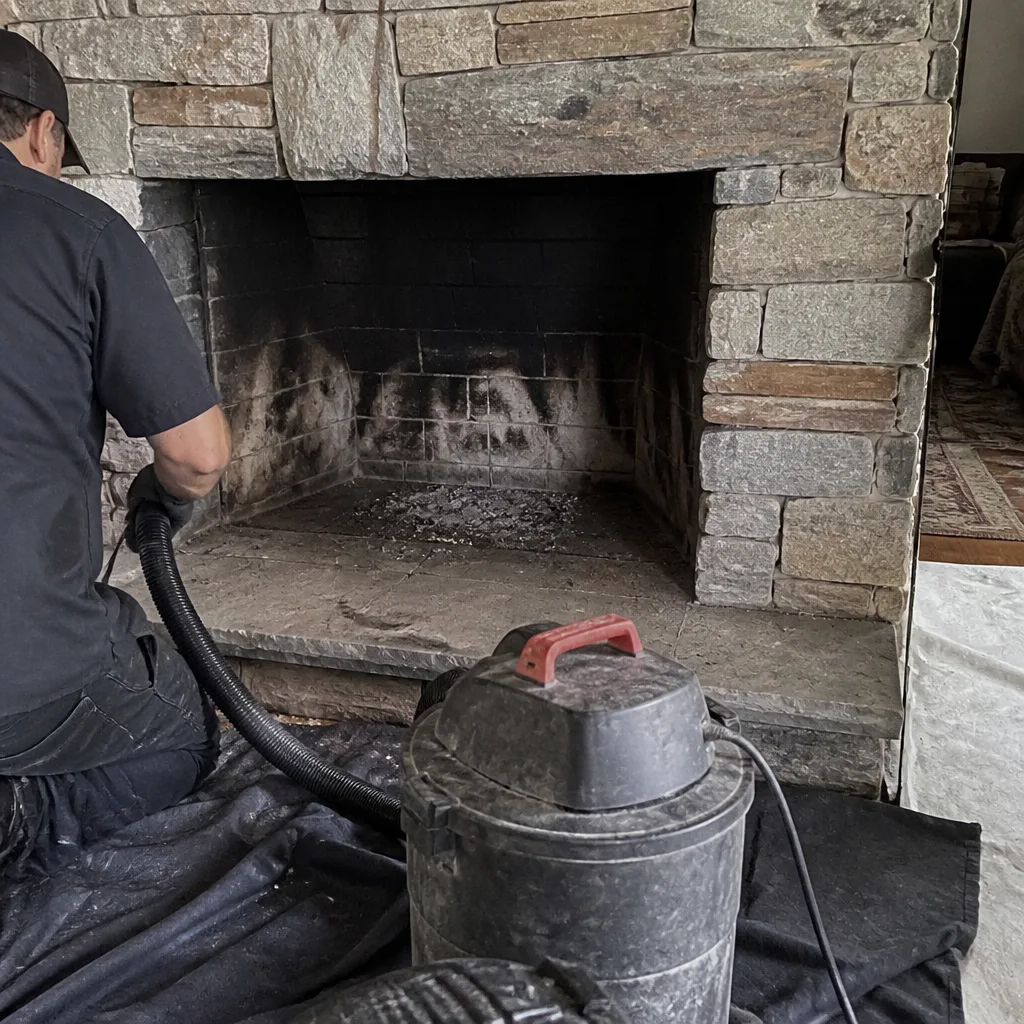 Before
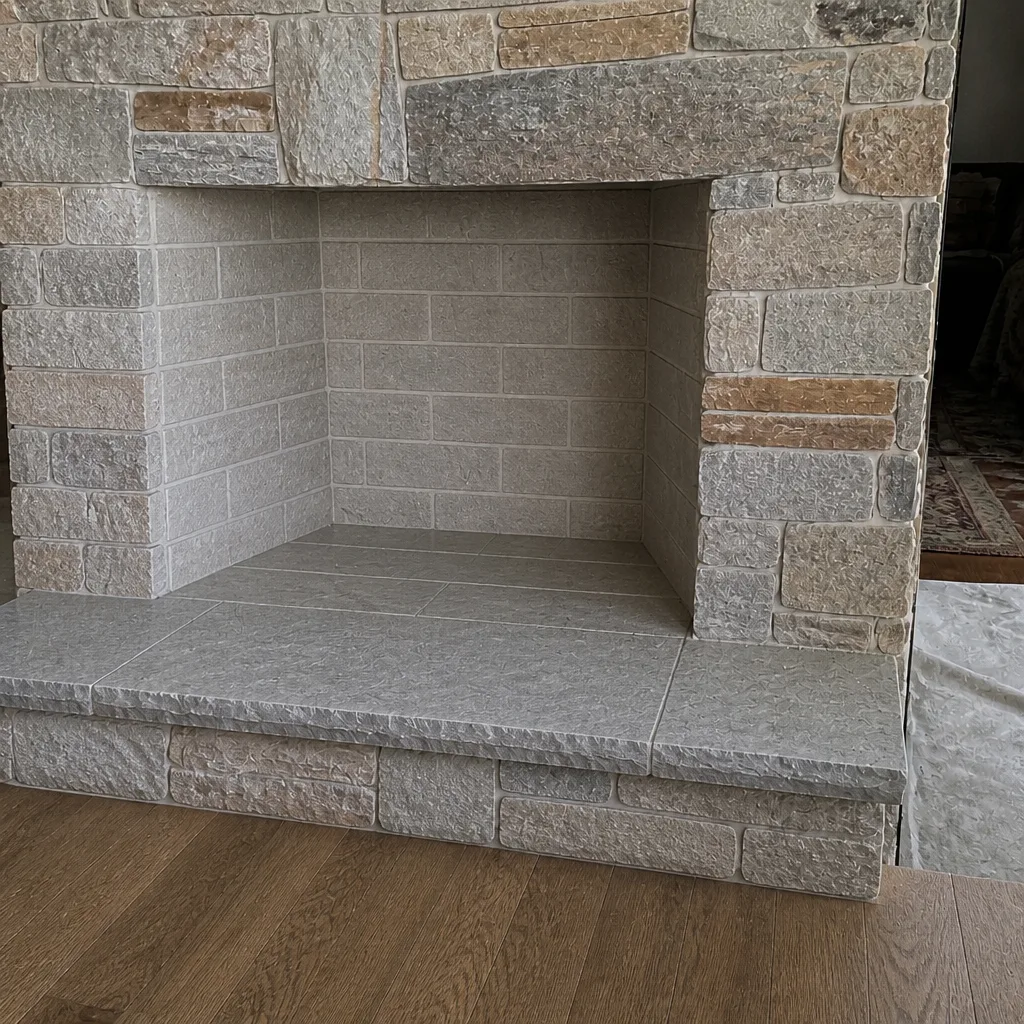 After
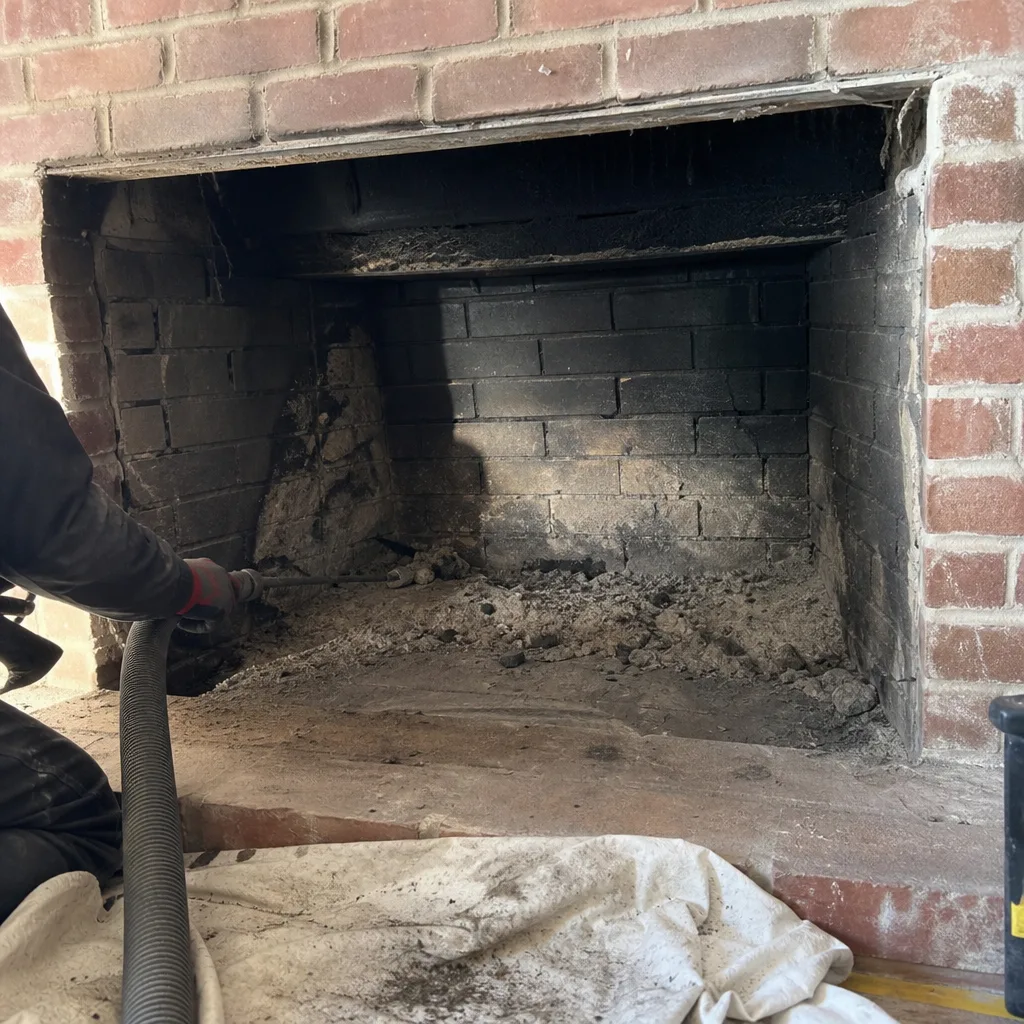 Before
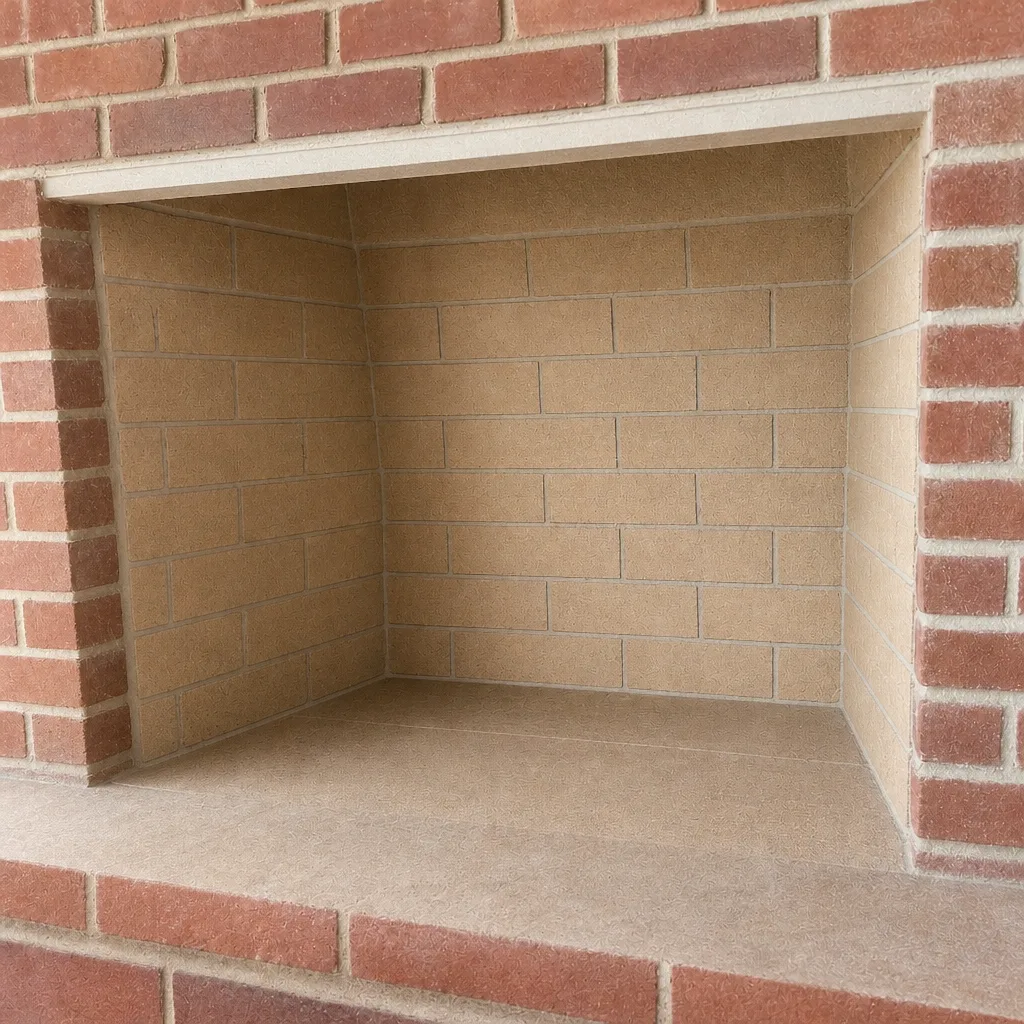 After
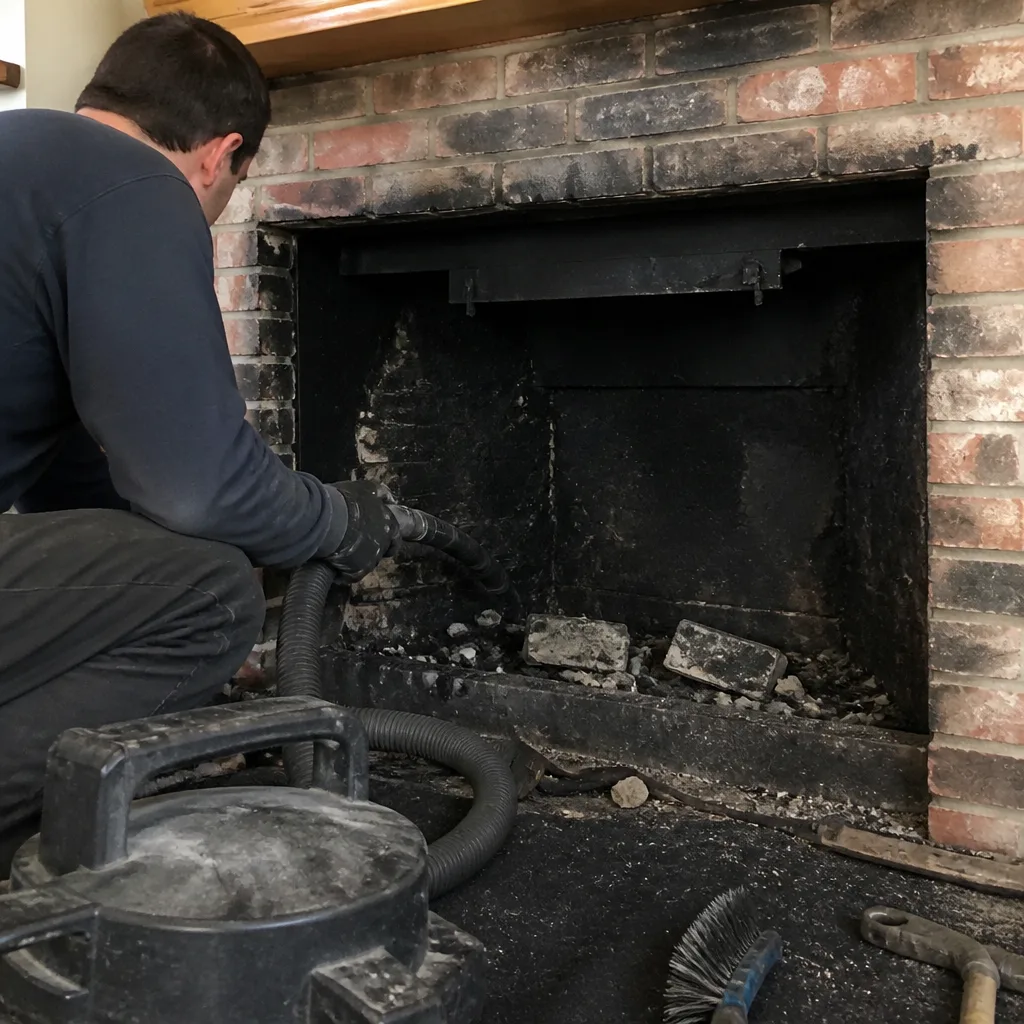 Before
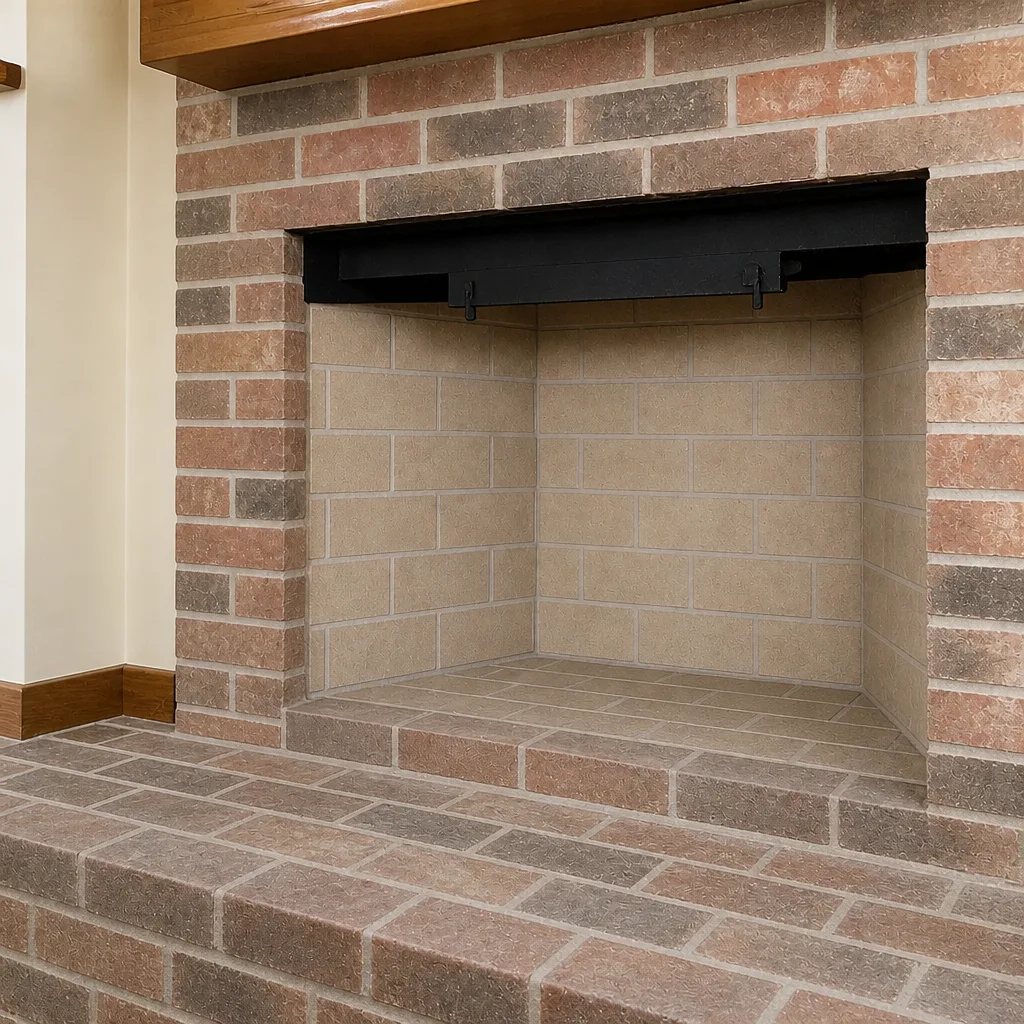 After
When to Call a Professional
Call a professional when smoke backs into the room, when there’s a heavy creosote smell even when the fireplace is cold, when you’ve had animals in the chimney, when you’ve moved into a home and don’t know the cleaning history, or when a prior inspection came back with a repair list you can’t verify. High-tension components and gas appliance venting are not things to handle without training, and a flue liner in poor condition is a fire risk rather than a cleaning task. Chimney Sweep Castle Rock offers free estimates in Castle Rock. Call (833) 699-7166. We answer 24/7. Fast dispatch from 7am to 7pm, Sunday through Friday.
Frequently Asked Questions
Plan on an annual sweep and inspection, and let the inspection tell you if your use calls for more. Castle Rock’s 6,224-ft elevation and slower, cooler fires can build creosote faster than in lower Front Range cities, so a chimney that burns heavily with less-than-dry wood can need it sooner. That’s why we recommend an annual inspection cadence. Call (833) 699-7166 for an exact quote. Estimates are free.
Only if the inspection shows the current liner is compromised, and we won’t say that without showing you the camera evidence. HeatShield-certified application capability lets us restore a deteriorating liner in many cases without full demolition, so a “new liner” recommendation isn’t always the only option. If the liner looks fine, we’ll tell you that too. Call (833) 699-7166 and ask for the photo report as part of your estimate.
Creosote stays on the flue walls, and the older it gets, the harder it becomes and the more flammable it is. The residue from the last fire of one season can sit through the summer and cure into the hardest stage before the next fire. Skipping a sweep doesn’t always produce a fire, but it removes the margin of safety. Call (833) 699-7166 for a sweep and an honest look at the flue.
Yes, a gas fireplace still needs annual inspection and cleaning of its venting. The deposits differ from wood creosote, but blockages, burner soot, and venting failures are still real, and carbon monoxide risk is the reason they matter. If your Castle Rock home has a gas insert that’s never been examined, it’s worth a visit. Call (833) 699-7166 for a free estimate.
Use, wood moisture, the appliance, and the flue type all change the rate. A newer home used as a primary heat source can build deposits faster than an older home that fires a few times a season, and a chimney near downtown with a masonry flue may need a different interval than a factory-built fireplace in Terrain or The Meadows. That’s why an inspection beats a schedule. Call (833) 699-7166 to book one.
Yes. Our sweeps include a camera inspection and a photo report, so you can see the findings for yourself before any repair is recommended. The goal is that you don’t have to take our word for it. Call (833) 699-7166 for a free estimate.
The Bottom Line
Chimney cleaning in Castle Rock isn’t a generic annual task. The town’s 6,224-ft elevation, its Douglas County wind, and its split between older masonry chimneys and newer factory-built fireplaces mean the right cleaning interval depends on the specific chimney, not on a rule of thumb. A real sweep includes a Level 1 inspection, a camera inspection, and a photo report you can verify. Gas fireplaces still need attention. Repairs get a written estimate, and the price is set per job by that estimate. If you’re unsure when your flue was last checked, the answer is a visit, not a guess.
Chimney Sweep Castle Rock offers free estimates in Castle Rock. Call (833) 699-7166. We answer 24/7. Fast dispatch from 7am to 7pm, Sunday through Friday.
Written by the team at Chimney Sweep Castle Rock.